
Positive transitions into school and early childhood settings for refugee and migrant children
Navigating transitions into new educational settings can be challenging for many families — but especially for refugee and migrant children and their whānau. In our webinar for early childhood and school teachers and leaders, Professor Sally Peters and Dr Hazel Woodhouse share insights from their research which highlight the powerful role of early childhood settings, schools, and Settlement Centre staff in supporting positive educational experiences and transitions and a strong sense of belonging, continuity, and opportunity for children and families as they transition to a new school or early childhood setting, as well as to a new life in Aotearoa New Zealand.
This TLRI funded research draws on the rich understandings of teachers, kaiako, and leaders within three early childhood settings and two primary schools and the local Settlement Service. Interviews took place with leaders, teachers, staff, and with families with children aged 3 – 8 years who had moved to Aotearoa within the previous two years. Children were involved in a dialogic drawing interview in which they were invited to draw a picture and at the same time talk about their experiences in a relaxed manner.
Key insights from the webinar include:
Schools and early childhood settings are experiencing increasing diversity as migrant populations grow. The refugee quota for Aotearoa New Zealand is 1500 people per year, a figure augmented by other refugee pathways (such as an asylum seeker pathway and a family reunification pathway).Overall, migration was reported to have risen 135% in 2023 from the previous year, and schools and early childhood settings have been responding to increasing diversity in their communities.Current research suggests that increased migration and social diversity may be related to several societal issues including cultural misunderstandings, socioeconomic issues and deprivation, loneliness and other mental health issues triggered by relocation, and, particularly for refugee families, trauma-related issues.
Refugee and migrant families and their children are navigating many transitions all at the same time. Children are starting a school or early childhood setting, but the whole family is experiencing a transition to a new country and all that that entails: learning a new language, adapting to culture and customs in the new country, learning about transport systems and local services, as well as a change in living arrangements and perhaps family structure. The transition to school or early childhood setting is, of course, made more challenging by similar factors related to language and familiarity with systems and culture, but also, for school children, by the challenge of joining a class during the year and trying to find a place in established classes. In addition, refugee children may have post-traumatic stress, as well as experiencing post-migration deprivation.
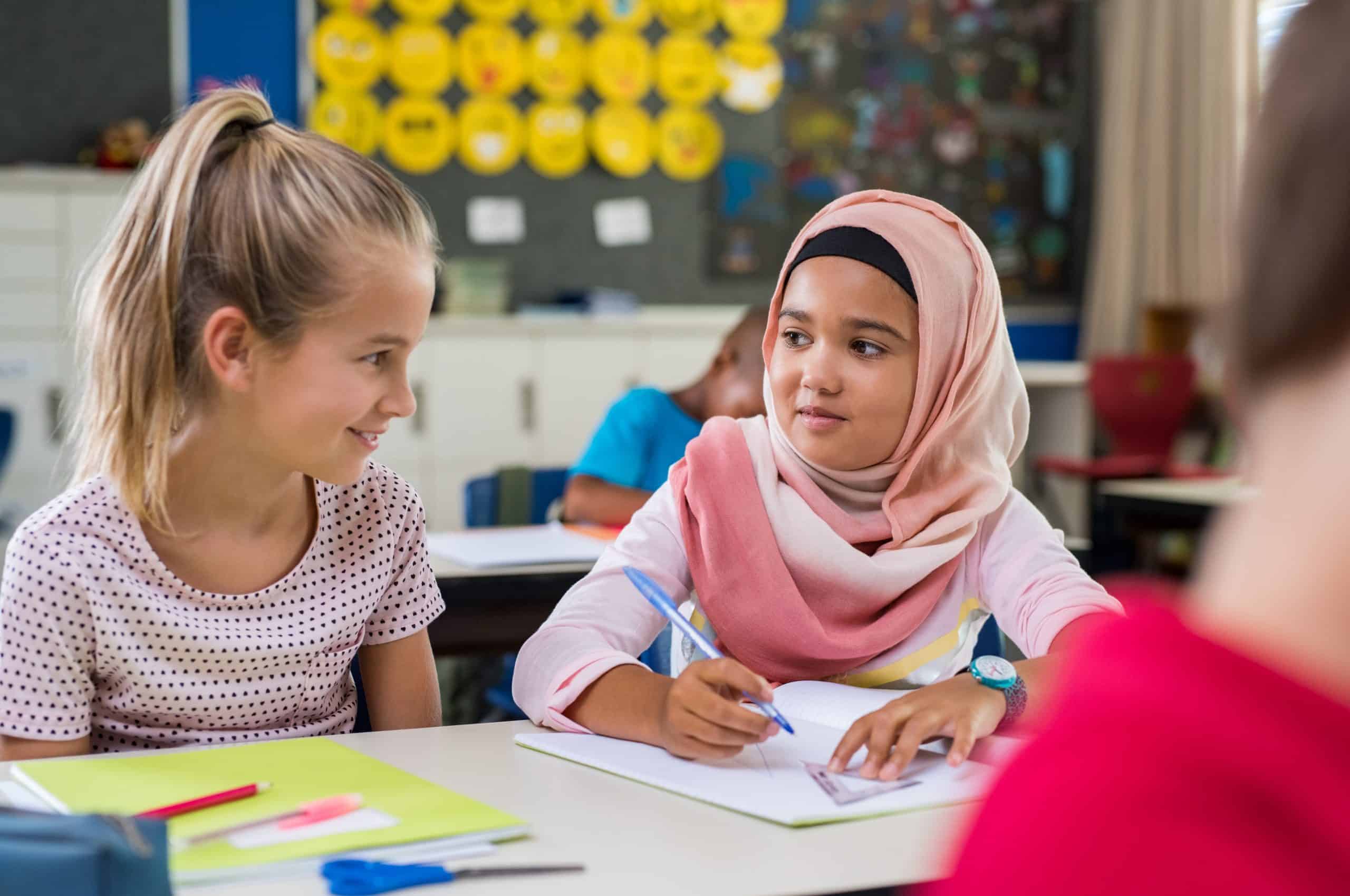
Trustful relationships that are built right from the start support effective transitions for families and children. Many kinds of relationship are needed, from formal connections with staff at Settlement Services, schools, and early childhood settings, to more informal connections with other recently migrated families or families from a similar language or cultural background. Relationship-building can be intentionally promoted through flexibility about class placements (to match children with same-language peers, for example), or about assigning a key teacher in the early childhood setting (selecting a teacher to whom the family or child seem particularly drawn). Teachers assigning buddies to newly transitioned children in school was noted as very powerful in supporting belonging and confidence for refugee and migrant children.
Small, thoughtful, and meaningful acts of support and kindness make a big difference. This might include helping families with enrolment forms, digital technologies and apps, and medical appointments and medications, or to understand things like recycling systems, as well as supporting families with gifts of clothing, blankets, and heaters for families caught out by unexpected temperatures in Aotearoa. Simple things like having a raincoat, a school bag, or a drink bottle are practical things that help children feel supported and fit into school. Not every support needs to come from the school or early childhood setting, but teachers often serve an important role in linking families up to other available services and supports. Simply taking time to stop and chat, or to learn a few phrases and words in the family’s home language, are other small acts of support that create very positive connections early in the relationship. Families in the study really appreciated the care and attention they received from teachers and kaiako.
Collaboration with Settlement Support services can be crucial. Some families will already be connected to these services, but because of different migration and refugee pathways, some may not be. Offers of connection to services need to be approached carefully, and teachers and kaiako must work with families and negotiate permission to liaise with other services.
Language is a central issue as really important conversations between schools and families are needed to support effective transition. A shared language for communicating with families is a huge asset, otherwise translation support is essential (this can be via community support or translation services). Families also appreciated acceptance of cultural differences, and interest in their culture from teachers and kaiako. They appreciated the flexibility that schools and early childhood settings showed, for example, in allowing children to bring familiar food from home. Teachers and kaiako worked hard to create spaces in which other children were also accepting of differences, so that these things were not a cause of bullying or rejection.
Many teachers mentioned a need for awareness of the potential for heightened fight-flight responses, usually related to past traumas in the home country or present stresses in terms of the multiple major transitions that families are undergoing. This awareness led teachers to place a special emphasis on creating a sense of safety and belonging in new space.
From the children’s perspective, making friends, learning English, and learning to swim were key transitional supports. Learning English helped children form friendships, but in turn, those friendships supported language learning, and children and families both identified important milestones as children making friends and beginning to speak English well. This means teachers might place special attention on helping children navigate early friendships and seek to nurture possibilities for friendships as they arise. Refugee and migrant families and children also demonstrated deep commitment to ensuring success for themselves and their children in their new country. They had high aspirations for children to success in careers such as medicine, policework, and business.
The value of understanding the past to understand the present was an important finding, and knowing more about refugee and migration pathways can be helpful to teachers and kaiako in understanding what support might be already in place and what more might be needed. Every family’s pathway to life in Aotearoa is unique, and support needs to be responsive to each family’s unique circumstances. In addition, parents had diverse prior experience of education which impacted on their ability to support their children’s transition, with some parents having never been to school, and others unaware of the concept of early childhood education, which did not exist in their home country (with young children having always been cared for by the wider family). This could make handing over a young child to a stranger in the early childhood setting particularly difficult for families. Shared understandings about the practices of school, and particularly the early childhood setting, needed to be developed, with early childhood kaiako taking time to explain play pedagogies and the value of activities such as outdoor play or bush experiences. Trusting relationships need to be in place before teachers can learn more about a family’s background.
Transition takes time, and can be difficult at the beginning, especially if there is no shared means of communication. A sense of belonging develops over time, and is supported by a really warm welcome, strong relationships, and co-ordinated support. Intentional, relational, responsive support should be ongoing, which necessitates regular reflection and careful experimentation in practice on the part of teachers and kaiako.
Get unlimited access to all our webinars
Enrol myself
Access all our live webinars for 12 months
Access all archived recordings
Receive personalised certificates
Enrol myself AND others
Get up to 25% off when you register as a group
Access all our live webinars for 12 months
Access all archived recordings
Receive personalised certificates
Enrol others NOT myself
Get up to 25% off when you register as a group
Access all our live webinars for 12 months
Access all archived recordings
Receive personalised certificates
Further resources
Learn about the different settlement pathways available to refugees here.
Aislinn, L., Separa, C. (2024). Cultural adaptation experiences of people in New Zealand, Review of Communication, 24(2), 97–113. https://doi.org/10.1080/15358593.2024.2313238
Jacobs, M. M. (2023). Learning from newly settled families in an Aotearoa New Zealand playgroup. Journal of Early Childhood Research, 22(2). https://doi.org/10.1177/1476718X231210640
Mitchell, L., & Kamenarac, O. (2022). Refugee children and families’ positioning within resettlement and early childhood education policies in Aotearoa New Zealand. Kōtuitui: New Zealand Journal of Social Sciences Online, 17(2), 224–221.
Mitchell, L., Bateman, A., Kahuroa, R., Khoo, E., & Rameka, L. (2020). Strengthening belonging and identify of refugee and immigrant children through early childhood education. TLRI. https://tlri.org.nz/wp-content/uploads/2024/04/1257-Final-Report.pdf
Stats NZ. (2023). International Migration: November 2023. https://www.stats.govt.nz/information-releases/international-migration-november-2023/#:~:text=and%20trend%20series-,Annual%20migration,of%2011%2C400%20(%C2%B1%20100)
Woodhouse, H., & Peters, S. (2025). “It’s the little things that make a difference”: Supporting the transition to ECE in Aotearoa for former refugee and migrant children. Early Childhood Folio, 29(1), 34–39. https://doi.org/10.18296/ecf.1155
UNHRC (2025). The Unbreakable Promise: Resilience and Resolve in Refugee Education. https://www.unhcr.org/media/unhcr-education-report-2025