
Autism
Autism is a form of neurodiversity that may create challenges for students in terms of communication and social interaction.
Definition
Autism, autism spectrum disorder, or ASD, is a type of neurodevelopmental disorder. This means that autism is present early in life and it is thought to be due to differences in the brain. Children with autism have difficulty with social communication and interacting with others. They also have restricted and repetitive behaviours, interests, and activities.
Relevance
Without appropriate support, the characteristics associated with autism may make it harder for a child to function in social situations, at school, and/or at home. Autism is a broad spectrum, meaning that some children may require a lot more support than others. The amount and type of support that each child needs will also change as they develop.
State of the evidence
Researchers are continually learning more about ASD, which has implications for which children are classified as having ASD. There also is a growing body of research on how to support children with ASD, however, there is still the need for much more research in this area.
In practice
Children with autism are more than capable of learning new skills and of interacting successfully with peers and adults. In some cases, they may need more support or different types of support to thrive. It is important to remember that every child with autism is different, and that no strategy will work for every child. Areas that children with autism often need support with are communication, social interaction, positive behaviour and self-management.
Guiding questions
- Do I know which of my students have autism?
- Have I asked the student what would help them to learn in my class?
- Have I engaged with parents and whanau to better understand the needs of my student?
- Do I know where to go in order to receive more support?

Sensory processing differences in the classroom
An introduction to understanding sensory processes differences and the impact they may have in classrooms and schools.

Understanding Pathological Demand Avoidance
An introduction to a rare but distinct form of autism.
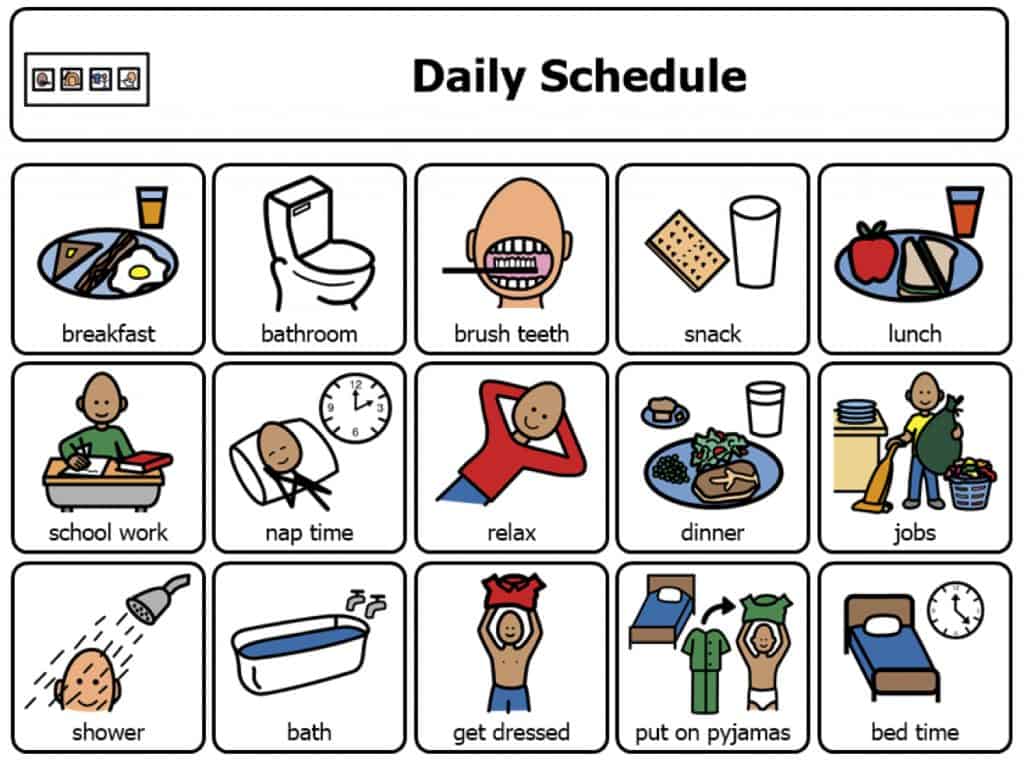
Supporting autistic children using a visual scheduling tool
A visual scheduling tool designed to support autistic children with their learning and wellbeing.

Teaching autistic students: Strategies for secondary school teachers
A set of practical strategies and approaches to help teachers support students with autism to thrive at secondary school.

An introduction to autism
A brief introduction to autism and what it means for teaching and learning.

Teaching autistic students: Strategies for primary school teachers
An introduction to evidence-based strategies for supporting autistic students in primary school settings.

Supporting neurodivergent students in the classroom
Dr Emily McDougal shares insights from her work into supporting neurodivergent students in schools and classrooms.
Neurodiversity in education
This webinar explores the challenges that neurodiverse students face in schools and as they move on to tertiary education, as well as how teachers and schools can help to ameliorate these challenges.


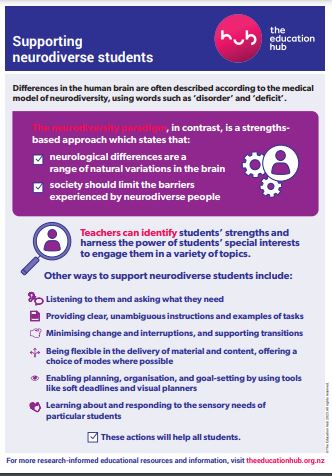

Key challenges for neurodivergent students in school settings and how to help
Insights from the webinar with Emily McDougal on supporting neurodivergent students in schools and classrooms.
Removing barriers to success for neurodivergent students
Dr Chiara Horlin offeres practical ways that teachers and schools can help to ameliorate these challenges and support neurodivergent students to celebrate and use their strengths in the classroom.