
Assessment for Learning
When employed well, Assessment for Learning can empower learners and improve progress and achievement.
Definition
Assessment for Learning (AfL) refers to the formative use of assessment information, gathered from both formal tests and informal observations of students, their work, and their responses in classroom discussion, to gain insight into the students’ learning progress, so that teachers and students can adapt their teaching and learning strategies to better support that learning.
Relevance
AfL enhances learning by indicating where learners require additional support and what is appropriate next as a learning challenge. It is a process of ‘learning, for learning, in learning’ — teachers and students are continually learning about what understanding the students have gained, in order to inform the next teaching and learning act.
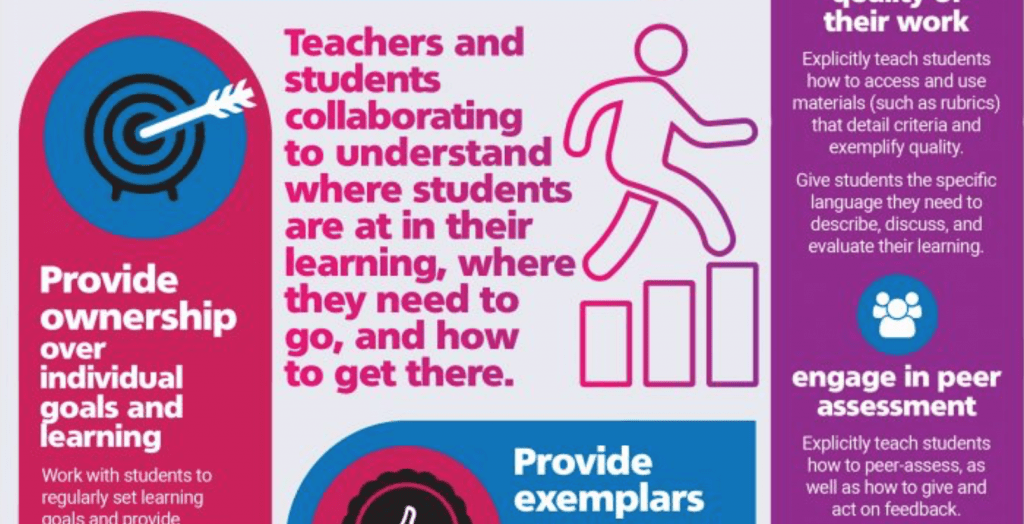
AfL is a collaborative partnership between teachers and students in which teachers and students learn together about students’ learning progress and needs. AfL supports the transfer of the ownership of learning to the students, so that students gradually come to manage their own learning.
State of the evidence
There is a growing research base, including a number of studies undertaken in New Zealand, on assessment for learning. However, there are still a number of aspects of assessment for learning that are under researched, including aspects of self and peer-assessment and what effective assessment for learning looks like in classroom practice.
In practice
There are a range of strategies and approaches you could employ in your classroom to integrate AfL into your practice. Some key practices are:
- Including learning objectives and achievement criteria for all lessons
- Integrating feedback that enables students to adjust their actions so that they can improve
- Teaching students how to undertake self and peer assessment
- Utilising annotated exemplars so that students understand expectations
- Explicitly teaching students to review and evaluate their abilities, knowledge states and cognitive strategies
Guiding questions
- How often do you talk about goals and standards with your students?
- How often do you provide opportunities for students to evaluate the quality of their work? And do you explicitly teach students how to do this?
- Have you taught your students how to engage in effective peer assessment?

5 steps to implementing Assessment for Learning
A series of steps designed to help you implement Assessment for Learning in your classroom.

How to transform teaching through Assessment for Learning
The key principles of Assessment for Learning and strategies for classroom implementation.

QUIZ: How assessment-capable are you?
A checklist to help teachers evaluate how they implement and use assessment to inform teaching and learning.

11 strategies for developing assessment-capable students
A systematic look at a series of strategies designed to boost the assessment capability of students.

8 AfL practices that motivate students
A set of Assessment for Learning strategies designed to motivate students.

A brief introduction to Assessment for Learning
Assessment for learning at a glance.

Using assessment to create an education system that learns
Renowned assessment expert Michael Absolum (ONZM) explores the central role assessment should play in driving learning throughout the education system and how schools and teachers can adopt these ideas into their practice

In consideration of educational tests: evil, necessary, or beneficial?
Professor Gavin Brown takes a balanced perspective, suggesting that despite unwelcome side effects, schools and teachers need tests to know what students can or cannot do.

Harnessing and enhancing assessment in schools
Professor Stuart Kime discusses the role of assessment in teaching and learning with a particular focus on practical strategies for how teachers can enhance their assessment practice and embed effective assessment into their day-to-day teaching.

The role of assessment in an education system that learns
Key insights from a webinar with Michael Absolum.

The value of educational tests
Key ideas from the webinar with Professor Gavin Brown on how teachers can use tests to inform teaching and learning.

Harnessing and enhancing assessment in schools: key ideas from Professor Stuart Kime’s webinar
Key ideas on effective assessment practice in schools from Stuart Kime's webinar

Q&A with Assessment for Learning expert, Associate Professor Mary Hill
Associate Professor Mary Hill answers your questions about Assessment for Learning.

An animated introduction to Assessment for Learning
This short animation provides an introduction to Assessment for Learning: why it’s important, and how you can incorporate it into your teaching practice.

Seminar on Assessment for Learning
by Suzanne Corlett
Year 3/4 teacher, Suzanne Corlett discusses how she has integrated assessment for learning principles into her classroom
Assessment in New Zealand
With Mary Chamberlain
In this presentation Mary Chamberlain discusses where we have been, where we are going, and what are our opportunities for assessment in New Zealand.
An innovative approach to assessment
by Karyn White
Deputy Principal at Alfriston College discusses the innovative approach to assessment her school has developed.