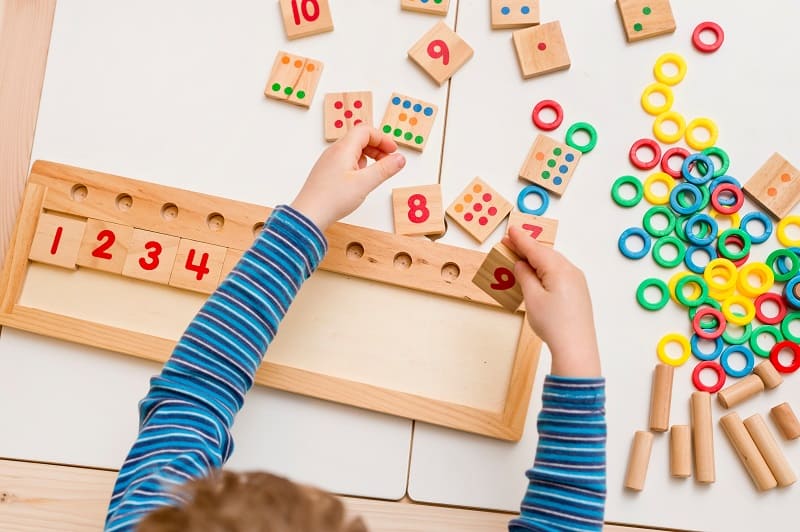
Early mathematical thinking
Children are surprisingly motivated and able to engage in mathematical thinking and problem-solving before they begin formal schooling and are thought to understand some mathematical concepts intuitively from birth.
Definition
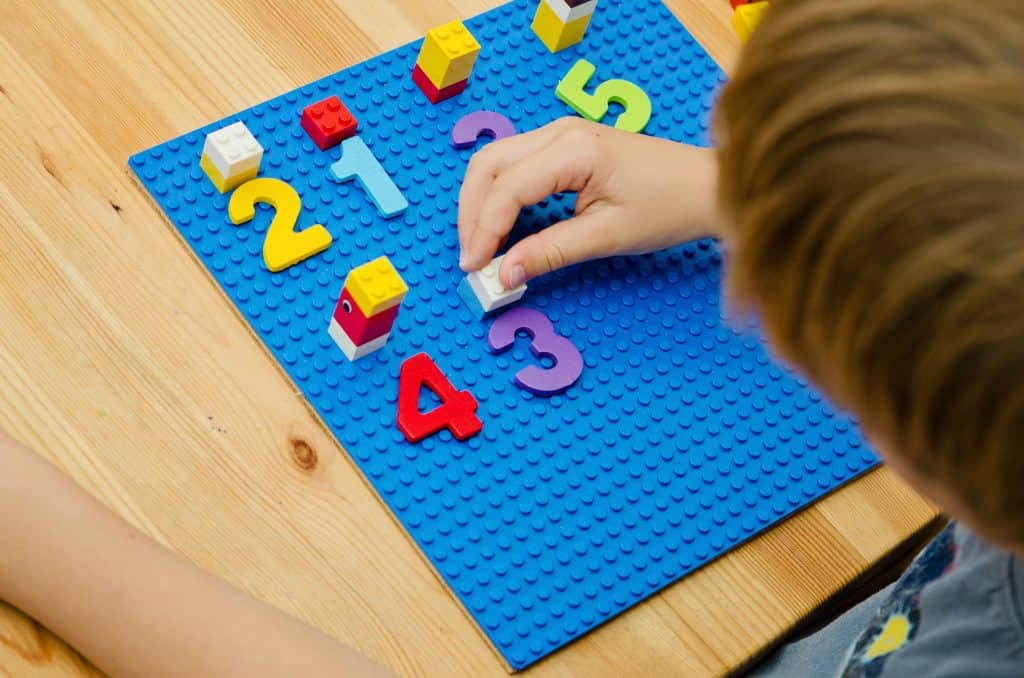
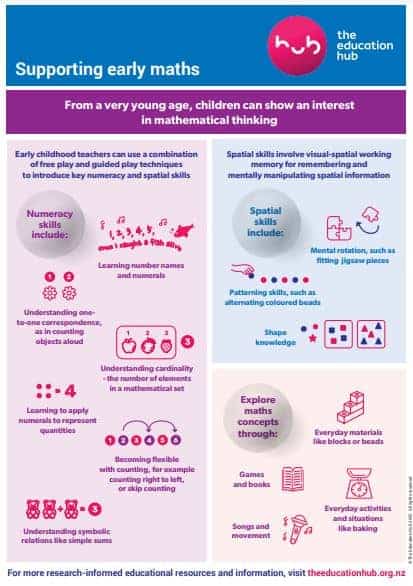
From a very young age, children can show an interest and engage in foundational mathematical thinking. This includes numeracy skills such as relative magnitude and basic arithmetical understanding, spatial skills such as an interest in building and shapes, and pattern skills such as recognising and extending sequences.
Relevance
Supporting children to explore and develop their understanding of foundational maths skills involving numeracy, patterns and spatial understanding can facilitate their ongoing learning in maths. Numeral knowledge, which links children’s knowledge of quantities with their symbolic representations and tends to develop as children approach the age of five, is also predictive of children’s success in mathematics in early to late primary school.
State of the evidence
There is a growing body of evidence to demonstrate both the kinds of mathematical thinking that young children are able and motivated to engage in, and the relationship between the development of certain early mathematical skills and knowledge and later maths achievement.
In practice
Early childhood teachers can notice and respond to children’s emerging interest in and understanding of maths by supporting them to further develop those interests and understandings through a combination of free play and guided play techniques such as games. By being aware of the foundational maths skills that children are ready to learn and demonstrate in early childhood, teachers can recognise when children are practising those skills on their own during play, and intentionally design and incorporate ways to support and develop these skills into the curriculum.
Guiding questions
- How do you recognise early mathematical thinking in children’s play and language?
- How do you intentionally support children’s interest in and understanding of early maths through free and guided play activities?
- How can you build your own understanding of foundational mathematical skills and knowledge in order to recognise and support it in the children you work with?
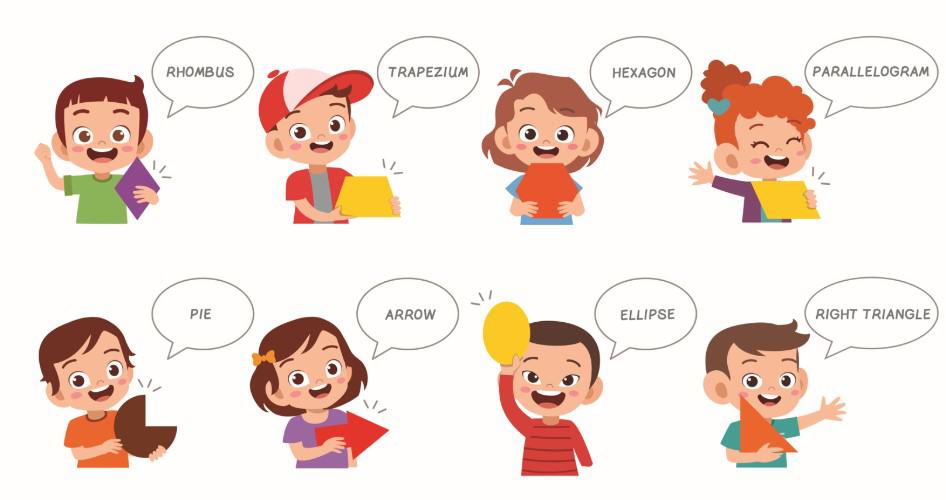
Supporting mathematical learning through language
How using mathematical language in early childhood education supports young children's understanding of mathematical concepts.

Culturally responsive mathematics teaching in early childhood education
The importance of culture in children's early maths learning.
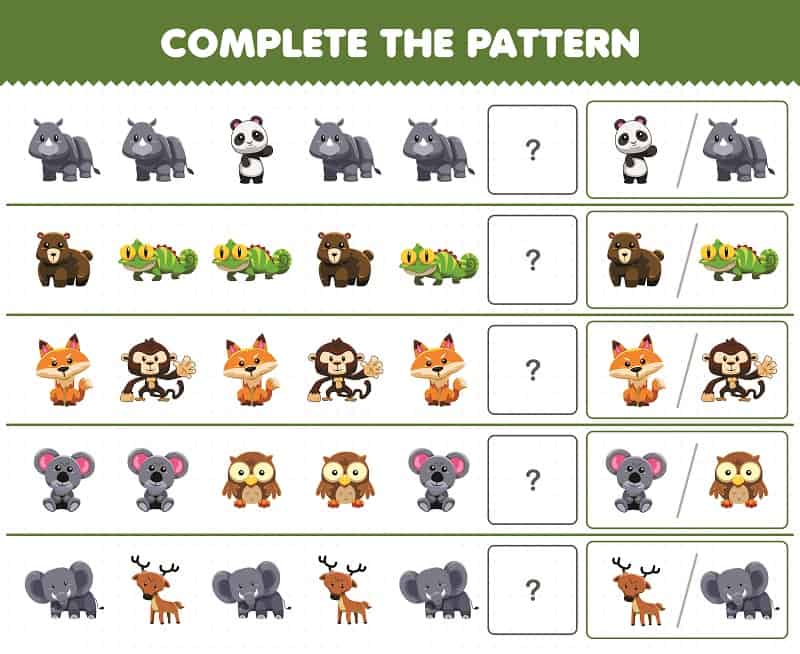
The role of pattern in children’s early mathematical understanding
How noticing and learning about patterns contributes to children's developing mathematical understanding.
Symbolic relations and combinations
Symbolic magnitude comparison and adding and subtracting quantities using number words or written numerals.

Repeating pattern skills
Fixing, copying, extending and abstracting patterns.
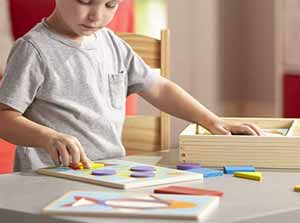
Spatial skills
Learn how to identify and guide spatial visualisation, form perception and visual/spatial working memory.