
Reading for pleasure and reader identity
In a webinar, Dr John Milne from Auckland University of Technology (AUT) shared insights from his research into how children and young people experience reading, what they have to say about their own reading, and how they experience reading in different ways.
The value of reading for pleasure
Reading for pleasure, particularly of fiction, is linked to stronger vocabularies, better school performance, and enhanced brain function and social behaviour in children. Its benefits extend beyond the individual: people who read for pleasure are more likely to volunteer, participate in community life, and vote, reflecting reading’s wider role in strengthening social bonds and civic engagement.
Literacy instruction and the boundaries of structured approaches
New Zealand teachers have traditionally drawn on a broad range of approaches suited to the learners in front of them, reflecting a wide view of what reading is and what role it plays in people’s lives. Current reforms may be interpreted as leaning towards a narrower, more instrumental view grounded in the simple view of reading, which treats reading as the product of decoding ability and oral language comprehension. Decoding and encoding skills matter, and systematic phonics has long had a place in classroom practice, but this model only addresses some of the knowledge and skills required for reading. Structured literacy remains an essential component of reading instruction, but treating it as a complete solution risks narrowing how young people come to view and engage with reading.
Reading as a social and community practice
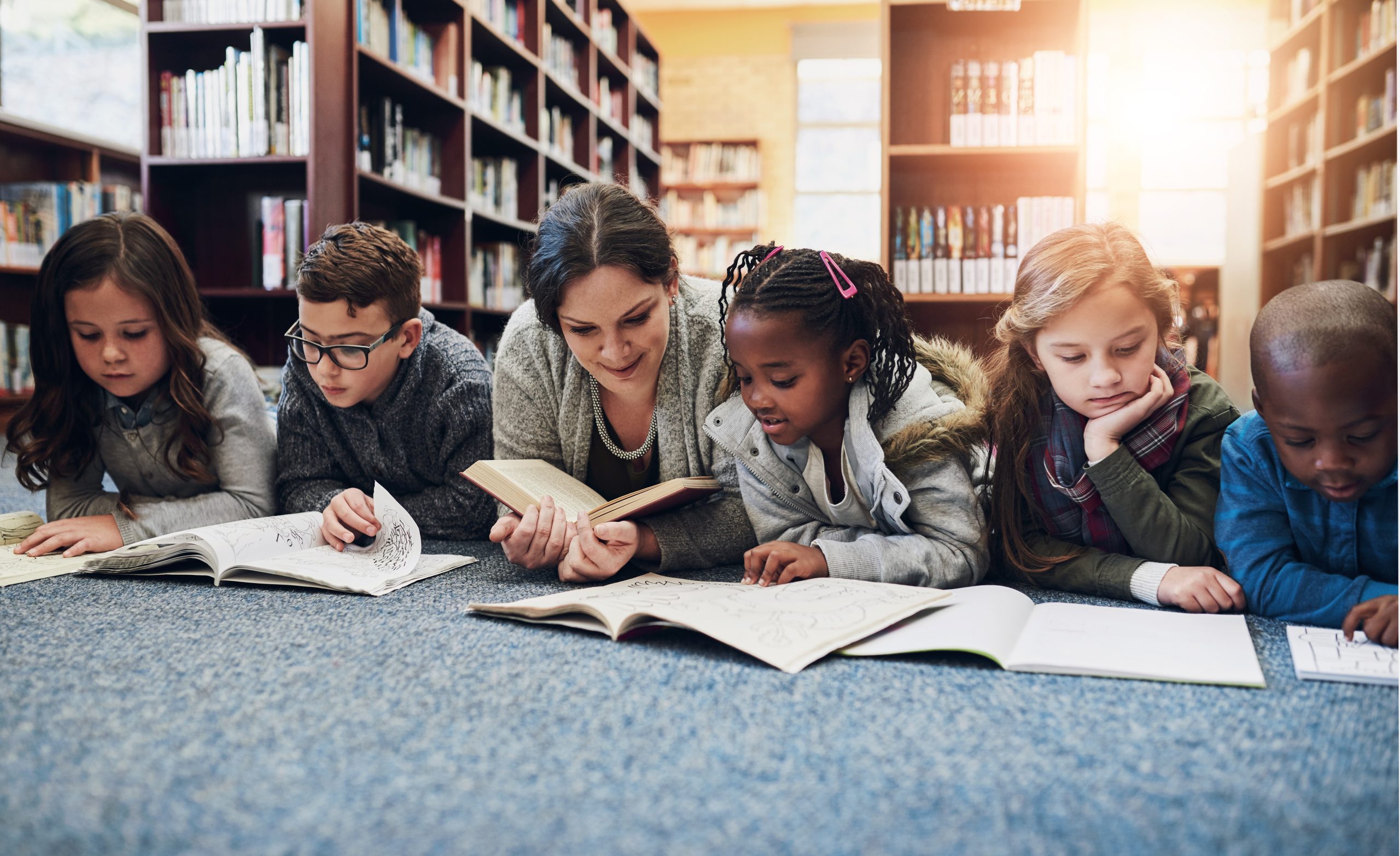
The Communities of Readers project, run with the National Library of New Zealand, worked with schools and communities to build a shared identity as readers, and found that the social dimension of reading matters more than the common image of reading as a solitary, quiet pursuit suggests. Modelling reading socially, such as a school principal reading a book in the playground, gradually drew children into reading alongside adults, showing them that reading is valued rather than something to be tested or graded. This challenges the assumption that fostering reading enjoyment is primarily a home responsibility, separate from a school’s job of teaching literacy.
Evidence from the Growing Up in New Zealand study
Analysis of data collected when children in the Growing Up in New Zealand longitudinal study were eight years old found that children who read for enjoyment were also more likely to be engaged in organised sport, music, and the arts, challenging the stereotype of the solitary reader. Screen use mattered less in terms of time spent and more in terms of purpose, with young readers tending to use screens purposefully rather than to scroll passively.
A second analysis, drawing on wellbeing data collected from twelve-year-olds during the COVID-19 lockdown, found that the amount of parental reading a child received in infancy was linked to better wellbeing outcomes during that period, including fewer reported symptoms of depression or anxiety. Several survey questions proved difficult for children to interpret consistently, likely leading reading to be under-reported, and follow-up focus groups added valuable depth: many children described reading as a source of connection during a period of reduced social contact, a valued means of escape from pandemic-related stress, and, in the case of dystopian fiction, a way of putting their own circumstances into perspective.
Rethinking stereotypes about readers
Children in focus groups pushed back firmly against the stereotype of readers as quiet and withdrawn, insisting that readers are simply people, no different from anyone else. Despite this, the stereotype remains widespread, including among adults working in education, and is reinforced by how difficult it is to find images of readers that do not depict solitary, individual reading. Because reading enjoyment research in New Zealand remains limited, many of these findings raise as many new questions as they answer, pointing to a need for further high-quality research in this area.
Reading ‘styles’ and reader identity
John’s doctoral research into how children experience reading identified several distinct reading styles, most associated with fiction reading. Successful readers tended to use question-driven or visualisation-based approaches: some read with a specific question in mind, quickly scanning for relevant information, in a style described as ‘hunter-seeker’, while others read with a more open-ended curiosity about what might happen next, described as ‘wandering’. Others experienced reading as an internal movie, either passively observing the story as a ‘movie watcher’ or more actively constructing it as a ‘movie maker’.
Less successful readers, by contrast, tended to focus heavily on decoding accuracy rather than meaning, whether reading fluently but without tracking meaning, reading slowly and passively, or labouring extensively over individual words. This meaning-focused versus accuracy-focused distinction proved consistent across further studies with adults and adolescents: readers using accuracy-focused styles read less often and enjoyed reading less, while those using meaning-focused or visualisation-based styles read more and enjoyed it more. Not all successful readers visualise while reading, and many readers move between styles depending on what they are reading, both of which point to the importance of not assuming a single, uniform reading experience among students in the same classroom.
Implications for classrooms
Because different readers attend to different things while reading, a student’s blank response to a comprehension question based on a text being read silently or aloud does not necessarily indicate a lack of understanding, but instead may reflect that their attention was engaged elsewhere in the text. Talking openly with students about how reading feels, not only what was understood, helps build a genuinely diverse community of readers and supports critical literacy.
Case study research across nine schools and early learning centres in 2024 pointed to several conditions that support reading for pleasure in the classroom: genuine choice in what counts as reading, flexibility in when independent reading happens, awareness that well-intentioned practices such as pausing to ask questions during a read-aloud can sometimes disengage rather than support young readers, and the value of teachers both modelling reading and knowing individual students well enough to recommend books that will resonate with them. Ultimately, no single approach guarantees enjoyment; building the right environment, relationships, and range of responsive practices around each child is what moves them towards reading.