
Rethinking time to enhance infants’ and toddlers’ experiences and learning
In a webinar, Associate Professor Gloria Quiñones from Monash University explored how infants’ and toddlers’ interactions with their bodies, peers, and the more-than-human in their environment can be supported through thoughtful, slow pedagogies. Gloria’s research explores the intersections of time, body, movement, and place in practice, as well as the experiences and environments that support entangled wellbeing and meaningful learning. Through inspiring stories and practical insights, Gloria explored how intentional use of ‘time-full’ practices can enhance very young children’s experiences and engagement, cultivating environments to nurture wellbeing, enchantment, contemplation, and learning.
The key highlights and provocations for practice explored are:
Rethinking the meaning and utility of time in infant and toddler care, especially where there exists a culture around ‘saving time’, and where ‘slow’ has negative connotations in being opposed to efficiency. The clock can be understood as both material (represented on clocks and devices) and discursive (language about time, planning and labelling time). Drawing on Pacini-Ketchabaw’s (2012) ideas about ‘clocking’ practices which shape the work of teachers and educators, time structures possibilities (what can get done in the time that we have before the next ‘clocked’ time, such as a nappy time or meal time). All this means that time is not a passive thing, a backdrop to educational practices, but is an active agent, operating on the bodies of teachers and children and on the events of the early childhood setting.
The importance of intentionality about how time influences practice. Slowing down, countering that rush to the next thing, can help teachers and educators to anchor themselves in the moment and offer children attention, presence, and connection. Sitting with children is a way to create a slower atmosphere in which everyone can feel time-full, rather than rushed. Young children are very aware of what is going on around them, watching teachers and educators moving quickly from place to place! It is important to step back sometimes, watch, and wait to see how children are relating to an event. There are skilful decisions to be made about whether we choose to fill the time, with a question or comment perhaps, or whether we step back and wait for a response. This is a kind of dance!
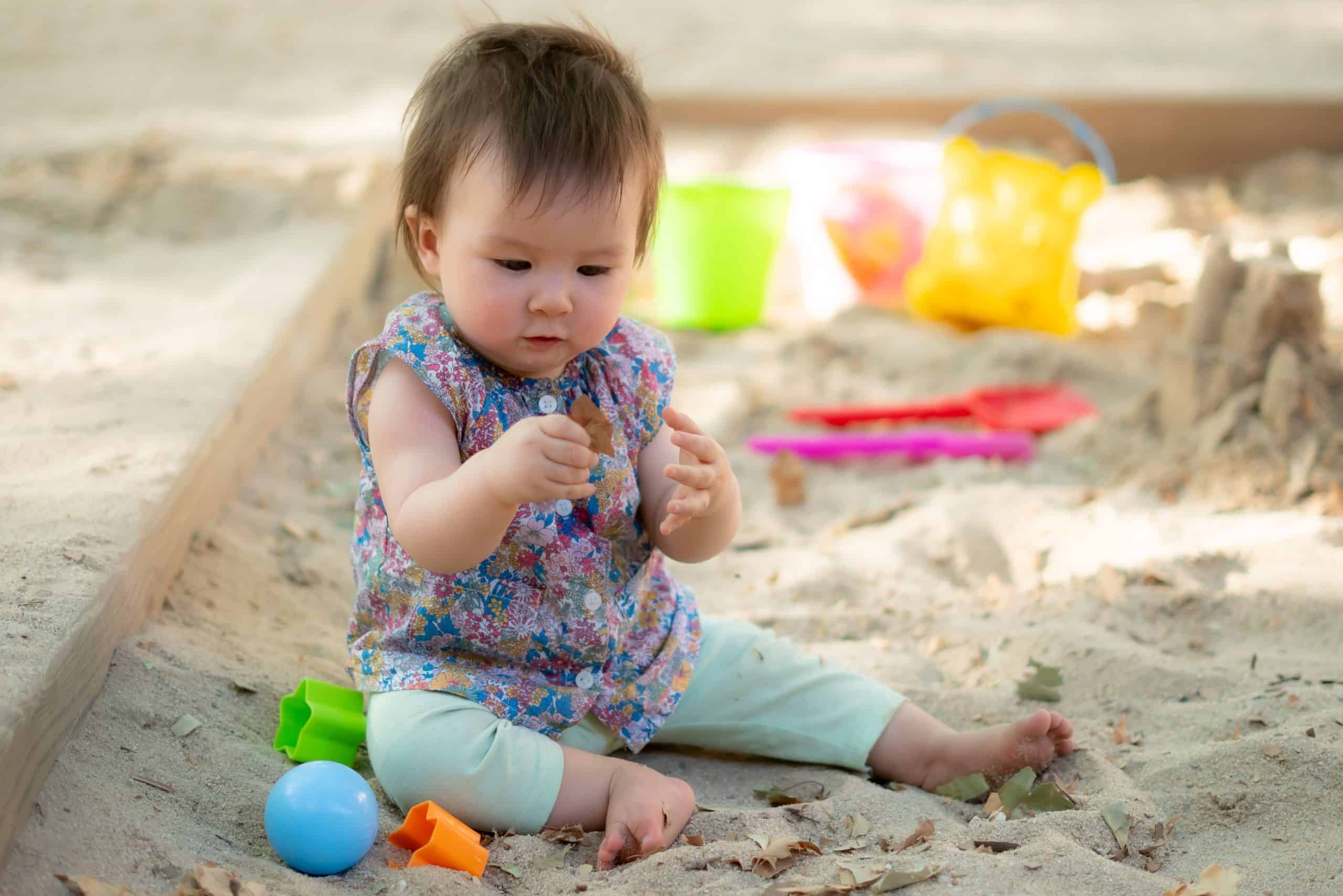
Using time to support relationships. Slow pedagogy offers time to connect to each other, and to the more-than-human in our environments. Time enables relationships with materials, such as the state of wonder and enchantment that young children can experience, for example, on encountering a daisy. Young children love to collect things and to carry keepsakes, which may be a practice for holding the moment (holding time). Slowing down helps us to notice the extraordinary in the ordinary, the way very young children do.
Acknowledging the fleeting nature of moments in infant and toddler care and education, which necessitates presence and attention from teachers and educators. Sometimes interactions can be very brief, such as small gestures towards peers, a quick smile or glance. Being present and attentive can be easier if teachers and educators are thinking less about the clock in these moments.
Allowing a new relationship with time to open up possibilities. The quality of presence associated with slow pedagogies can facilitate awareness of the kinds of possibilities that might develop or flourish in children’s encounters with the human and more-than-human world of the early childhood setting. For example, giving time to a child to return his own plate to the counter after a mealtime, which, while it may take longer (especially if it involves managing this task while crawling), is important for enabling autonomy, responsibility, and feelings of accomplishment. When children are taking things slowly, perhaps because they are new, or because there are many different elements to explore (tables, sitting down, processing food, cleaning actions), teachers might also take a cue to slow down as well, and take time out from time-structured tasks such as cleaning up.
Respecting children’s time to understand what it is that children want to do with their time. It can be important to be intentional about prioritising children’s intents and purposes, rather than routines and tasks or your own concerns as a teacher. A useful metaphor Gloria uses to understand children’s use of time is that of wayfaring (Ingold, 2011), to move away from linear movements (such as those represented by timelines) to describe the more circuitous movements with which children explore, learn, and develop. Rather than going linearly from a to b, very young children think and move in many directions at once, building their own pathways and following their own interests.
Thinking about processes and movements rather than outcomes, because children’s learning is not static and fixed at any moment of time (by contrast, milestones are usually measured with time, but children all have different timings for their development). Learning is a process of becoming and movement that is ever evolving, so it is interesting to think about how we document and assess learning-in-progress.
How to slow down. Practices include trying not to rush but instead seeking to get immersed and enchanted by and with children, listening to children, wondering with children, and describing what is happening. Being enchanted is not easy, but intentionally planning time for simply ‘being there’ with children is a good place to start. It can help to look for the surprises in ordinary events, and allow a moment or experience to ‘hit’ you, using your senses and your body. Slowing down can help you to take time to see where the children are leading you, to find out what children are noticing so that you can wonder more with them. An awareness of the vitality of human and non-human bodies and the encounters between them, being sensitive to what is there, can support greater openness and enable moments of pure presence, such as those very young children experience. Suspending time can help intensify the sensory and emotional experiences needed for enchantment. This means aiming to reduce ‘thinking’ (which is where you are predominantly focused on thinking about the clock, wasting time, being busy, and needing to hurry) to focus more on engaging your emotions and your senses.
Cultivating spaces for contemplation. Teachers and educators can make spaces such as floors and ceilings more pedagogical in terms of encouraging contemplation, or add new intriguing elements to spaces. Contemplation and enchantment might be facilitated by being outdoors and being with nature, as well as through being with children. Walking with children or taking children in prams can offer teachers and children moments of contemplation. Teachers might think about wayfaring, and attend to the ways in which they and children go off track, the different inquiries that children have, and the way that this opens up possibilities for learning.
Further resources
Bennett, J. (2010). Vibrant Matter: A Political Ecology of Things. Durham, NC: Duke University Press. https://doi.org/10.1215/9780822391623.
Clark, A. (2023). Slow Knowledge and the Unhurried Child: Time for Slow Pedagogies in Early Childhood Education. Routledge.
Ingold, T. (2007). Lines. The Open University.
Pacini-Ketchabaw, V. (2012). Acting with the clock: Clocking practices in early childhood. Contemporary Issues in Early Childhood, 13(2), 154–160.
Quiňones, G. (2023). An infant-toddler outdoor risky play practices in an early childhood centre in Australia.Journal of Outdoor and Environmental Education, 26, 463-477. https://doi.org/10.1007/978-3-031-89376-6_11 (Isaac’s plank-climbing risk-taking story)
Quiňones, G. (2025). Exploring infant-toddler’s well-being: Being-with the flow of time and space. In G. Quiňones & A. Delaune (Eds.) Well-being for Infants and Toddlers in Education and Care (pp. 163-177). (Isaac’s meal-time story).
Quiňones, G. & Cooper, M. (2026). Infant-toddlers’ embodied risk taking in outdoor play environments in Australia and New Zealand. In T. Gray, M. Sturges and J. Barnes (Eds.). Risk and Outdoor Play. Listening and Responding to Collective Voices: Part 2 (pp. 149-164). Springer. https://doi.org/10.1007/978-981-95-5275-7_9
Quiňones, G. & Duhn, I. (2025): Climate change education for the youngest children: Encounters with weather. Environmental Education Research, https://doi.org/10.1080/13504622.2025.2528972