Communication strand | Mana Reo
This series of guides on the principles and strands of Te Whāriki offers an overview of the key areas of learning within Aotearoa New Zealand’s early childhood curriculum. Each guide provides links to other resources across our website which can help in the implementation of the curriculum.
Communication strand | mana reo is a complex area of children’s development in the early years, involving much more than spoken or written words, but many forms of expression and shared understandings. The communication strand of Te Whāriki encompasses the development of skills in a range of communicative languages (including sign language, mathematics, art, visual imagery, drama, music, dance and movement) and for various purposes, such as using language in symbolic and abstract ways for imaginative and creative thinking or for logical reasoning and theorising.
Within the communication strand, children develop:
- Appropriate ways to express feelings and emotions
- Conversation skills such as taking conversational turns and responding to the utterances of others
- Extensive vocabularies and a sophisticated range of syntactical patterns
- Recognition of rhythym and rhyme, and sounds in words, such as those found in music, stories and rhymes
- Understanding that a variety of symbols (including words, images, sounds, marks and shapes) can be used to represent ideas, feelings, and experiences
- Recognition of letters and understanding of print concepts such as the direction of text across the page
- Storytelling skills for re-telling familiar stories and creating their own
- An interest in reading and writing
- An understanding of numbers and how they are used and represented
- The ability to use mathematical concepts to explore patterns and relationships involved in aspects of number, quantity, measurement, shape and space
- The ability to be creative and expressive as well as skills to express ideas using creative media and tools for visual arts, craft, music, movement and technologies
- Language for social skills and interactions such as negotiating, communicating information, or eliciting support
- Language for problem-solving, explaining and theorising
- Familiarity with a diverse range of music, song, dance and drama, as well as their emotional impact and cultural use.
Some particular features of practice are significant for enabling children to develop communication skills. These include:
- Meaningful contexts for developing and practising language skills, which provide a range of reasons for children to communicate
- Teachers that value and encourage children’s verbal and non-verbal communications
- Environments in which te reo Māori is valued and accurately used
- Environments which offer a range of culturally familiar language contexts, including culturally appropriate stories and literature, traditional storytelling of cultural narratives, proverbs, humour and metaphoric language. Check out this resource for tips on how to avoid a tokenistic approach to incorporating children’s cultural resources in your programme
- Valuing children’s first languages
- Symbol-rich environments which demonstrate a range of ways to represent ideas
How might provision vary for children at different stages of development?
The communicative skills of infants can be encouraged when teachers invite infants to engage and wait for and respect their assent or dissent (see here for a list of daily opportunities for inviting children’s assent). A rich language environment can be provided with regular engagement in rhymes, finger plays and language games, and a focus on oral language use during regular routines and shared experiences. Environments for infants should also be rich in print, and infants should be provided with plenty of resources to explore patterns and sounds.
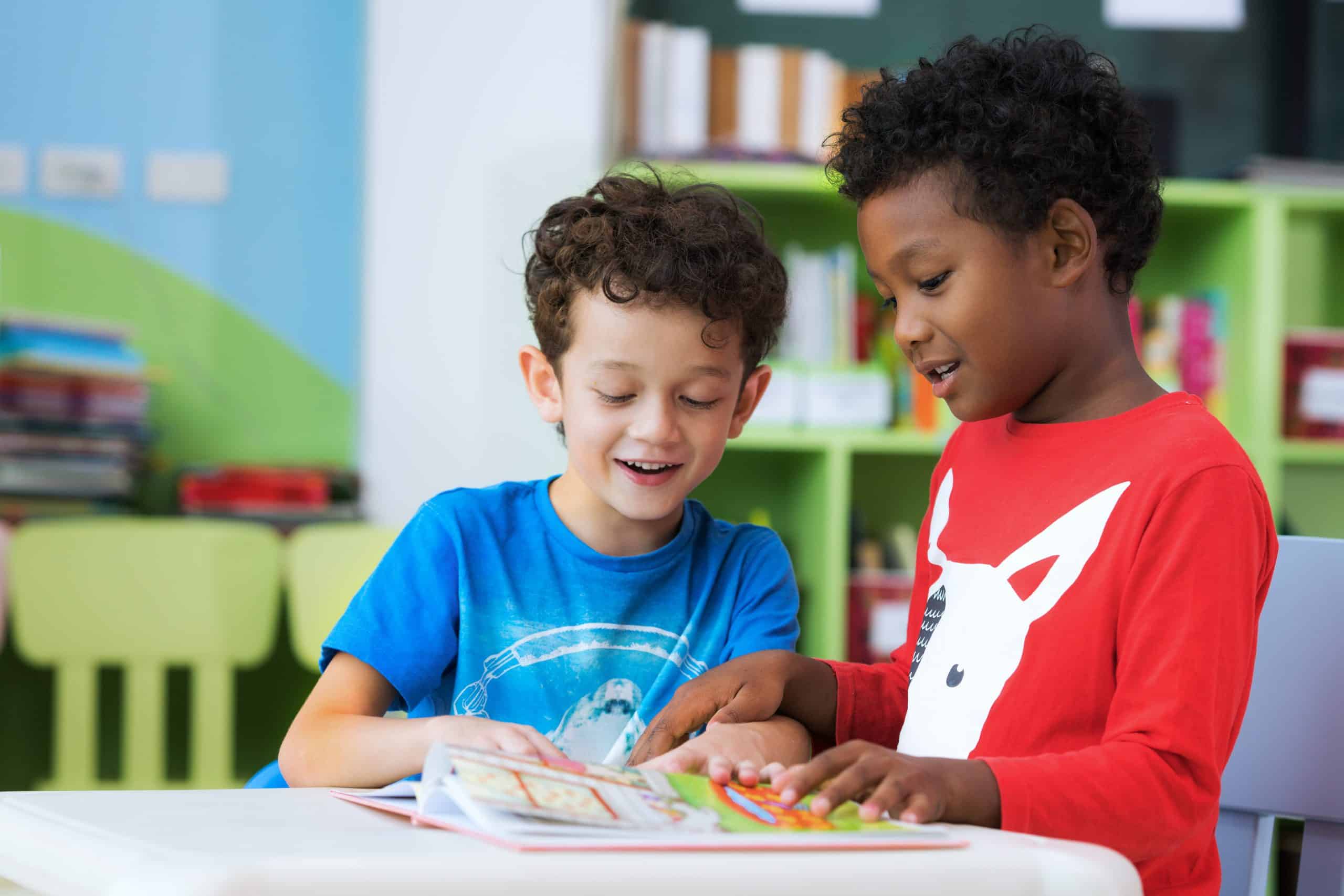
Toddlers can be encouraged to talk to each other, and to use their first language in a variety of contexts including play, poems, chants, stories, songs, and word games. Teachers aim to model language use to extend toddlers’ vocabularies and use of language in their first language, as well as introducing them to experiences with other languages. This can be supported through the provision of a wide range of sensory resources of different textures, shapes and colours for exploration, as well as props that stimulate creative role play. Toddlers should also be offered opportunities for mark-making, symbols and drawing and a variety of media for the expression of ideas, thoughts and feelings, and be encouraged to experiment with different tools and materials. Toddlers’ communication skills can also be enhanced through music and movement activities.
To develop strong communication skills, older children need lots of opportunities for sustained conversation, using complex language for a range of purposes, and increasing their vocabularies. Te reo Māori should be integrated into the programme, as well as children’s community languages. Children should experience a rich range of stories and storytelling, and have opportunities for group activities in art, music and movement. Experiences should also provide opportunities to learn about number symbols, mathematical processes and concepts, as well as early literacy knowledge such as concepts about print, and to recognise and write letters. They should be encouraged to use a range of materials and technologies to express their feelings, ideas and creativity. Children can also express themselves through pretend play, creating and modifying environments and rules, and engaging in humour and jokes.
Other areas that teaching teams may wish to explore in relation to communication include security and safety in relation to the use of digital technologies, additional support for children who require it, and the promotion of children’s home languages within the early childhood setting.
By Dr Vicki Hargraves