


theteam@theeducationhub.org.nz
Postal Address
The Education Hub
110 Carlton Gore Road,
Newmarket,
Auckland 1023
Including particular elements in your lessons leads to higher levels of student learning.
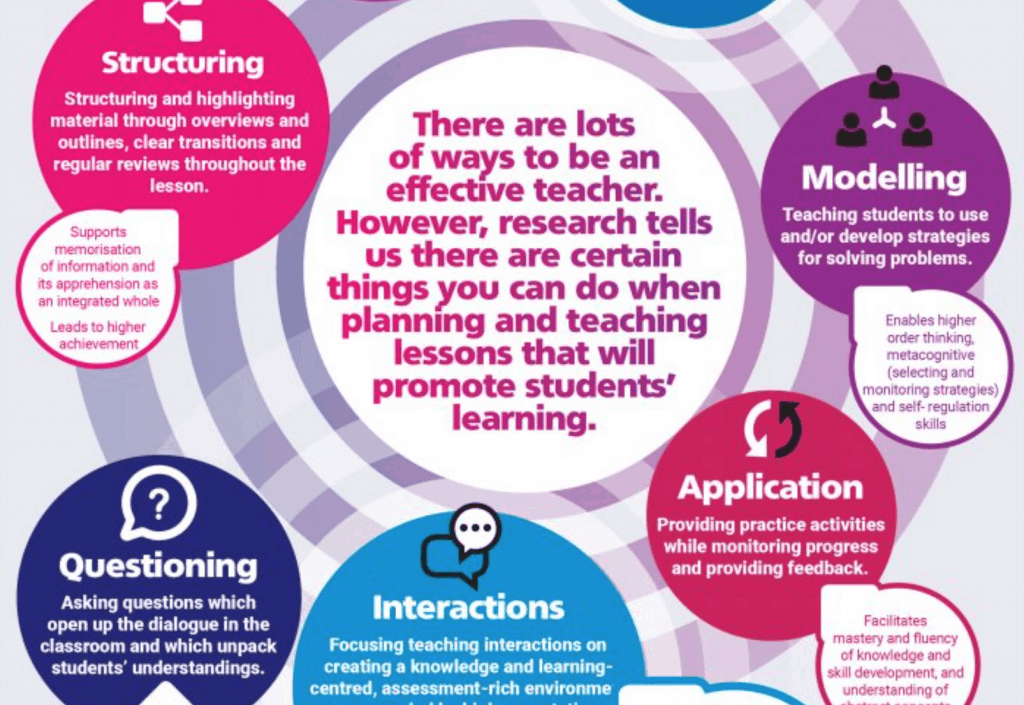
While there are multiple ways to plan effectively in your teaching practice, research tells us that there are certain things that you can do when planning and teaching lessons that will promote students’ learning.
Orienting: Explaining the objectives and success criteria of task/lesson.
Structuring: Structuring and highlighting material through overviews and outlines, clear transitions and regular reviews throughout lesson.
Questioning: Asking questions which open up the dialogue in the classroom and which unpack students’ understandings.
Modelling: Teaching students to use and/or develop strategies for solving problems.
Application: Providing practice activities while monitoring progress and providing feedback.
Interactions: Focusing teaching interactions on creating a knowledge- and learning-centred, assessment-rich environment accompanied by high expectations, and providing opportunities for students tutoring and helping each other, and giving feedback to facilitate each other’s learning
The instructional core – the interactions and inter-relationships among the teacher(s), the students and the content in the classroom context – that is, what happens at the classroom level underpin the whole teaching and learning process, are what predict the performance of an education system. Ensuring that the teaching and learning opportunities and activities that teachers design are structured to effect the greatest impact on students’ learning and development is critical.
There is a robust body of research, drawn from cognitive psychology and education, and incorporating both large-scale quantitative and smaller-scale qualitative studies, which support the 7 components of planning listed above.