
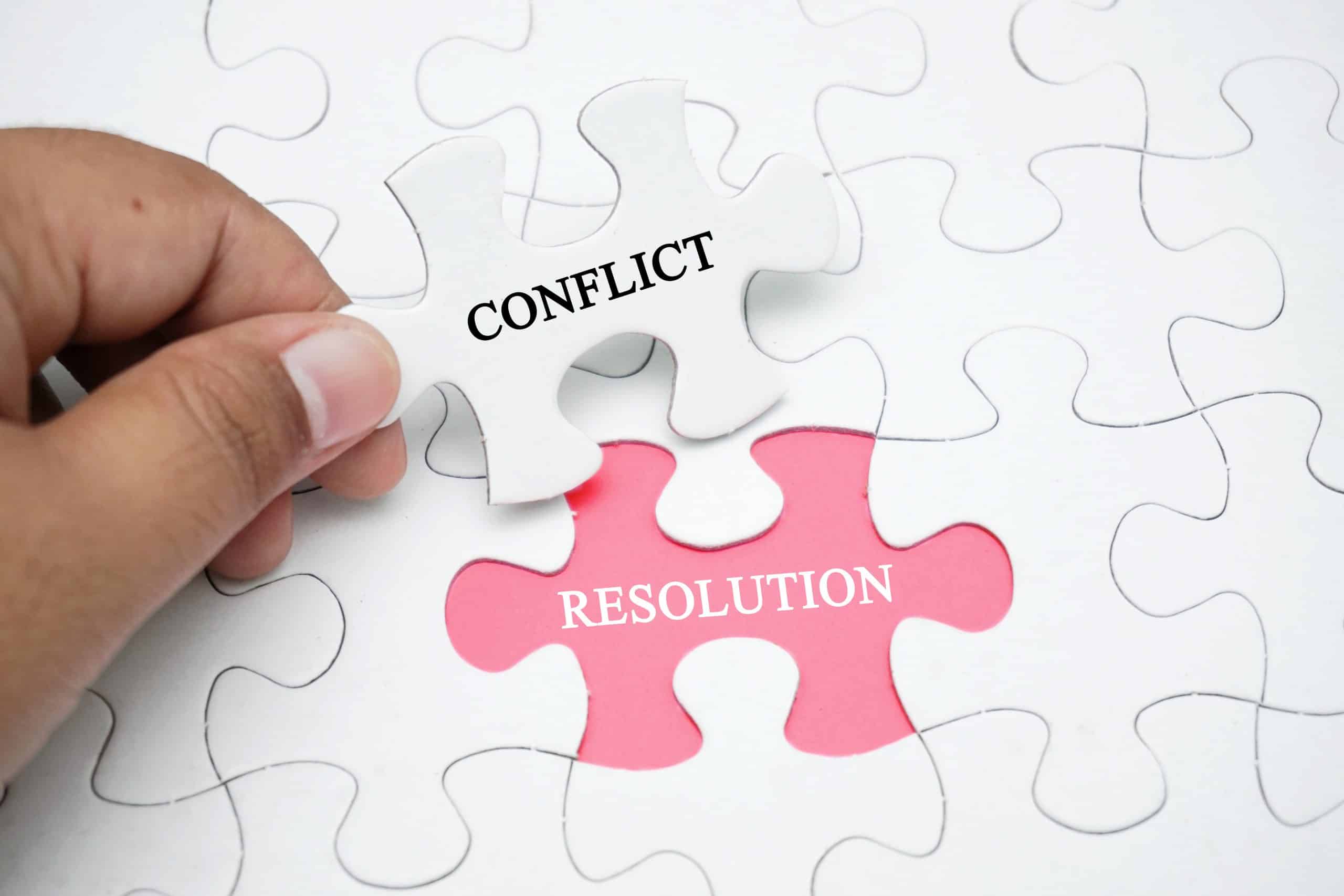
How to handle conflict between children
Conflicts are a natural part of any social context. Conflict occurs when children disagree, oppose or retaliate against each other, which may lead to challenging and emotionally charged interactions. Conflicts should not be associated with aggression, however, nor perceived as negative. This means they do not need to be quickly resolved, but can be used as a context for learning a range of social and emotional skills, such as empathy, communication, negotiation, emotional regulation and thinking. While conflict should not be avoided, or quickly stopped by adults imposing solutions, too much conflict can be stressful for everyone in an early childhood setting and so preventative measures, such as clearly understood routines and behavioural expectations, are important. Children can be overwhelmed by strong emotions during conflict situations and may find it difficult to remember and use strategies such as problem-solving until they are supported to regulate their emotions.
Support children to learn from conflict by:
- Being alert to situations that may lead to conflict, such as over-crowding in an area, a lack of resources or simply children’s preferences for special items or for space around them as they play.
- Taking a moment to think, observe, and get calm before responding, to help you in professional decision-making. Be guided by your knowledge of and relationships with children and focus on facilitating children’s emotional regulation, communication and perspective-taking and promoting children’s maximum participation in the process.
- Intentionally deciding whether to intervene in conflicts, or give children the opportunity for independent practice. Research suggests children under three are capable of independent conflict resolution, using strategies such as withdrawing or retreating, giving up without a fight, or using non-verbal strategies such as smiling or offering toys, especially if they are engaged in joint play before the conflict. Research with older children shows that children can resolve conflicts themselves using strategies such as reasoning, apologising, or suggesting cooperative ideas for play. Observe children’s progress, so that you can support children if necessary.
- Facilitating learning opportunities for children within conflict resolution, rather than directing children, restating rules, distracting children from the conflict, or other strategies intended to restore harmony for the sake of classroom management, as these remove children’s involvement from the process. Avoid focusing on ideas of fairness or justice, which will lead you to direct the conflict resolution process and choose solutions for children rather than listening to children’s ideas for resolution. Open-ended communication is found to be more successful in helping children learn conflict resolution skills than directing children in how to resolve conflict.
- Questioning to seek clarification about what is going on and each child’s perspective. Questioning encourages children to communicate with each other, and also gives children a message that the responsibility for resolving the conflict belongs to them. Make sure every child is given a chance to express their perspective and feelings, and acknowledge and validate those feelings. Explaining other children’s viewpoints to children, which supports children in the development of cognitive flexibility or the ability to take different perspectives. Skilled questioning can cue children to develop successful solutions.
- Comforting, encouraging and affirming children, which is found to increase children’s participation in problem-solving and sharing of perspectives with peers. Showing children warmth during periods of intense emotion can help children to regulate those emotions and become receptive to learning problem-solving strategies. Negative emotions, such as anger or anxiety, in particular are linked to decreased capacities for problem-solving by disrupting cognitive processes such as working memory and cognitive flexibility.
- Restating the problem clearly back to children with statements like “Oh I see, there’s only one truck”, to encourage children’s involvement in solving their own conflict problem.
- Offering children a range of possible things to say (“please can I have a turn?” or “I am playing with this now”” or “that annoys me!”) to help children learn social skills and appropriate language. Pay attention to non-verbal communication especially for children with emerging language skills, as toddlers and young children may use formulaic phrases (like ‘stop it – I don’t like it’) without deep understanding.
- Remaining child-centred. For example, in the case of children excluding a peer from their play, teachers should be open to helping the excluded child to accept the lack of opportunity to join the group and find something alternative to do, rather than insisting on inclusion. Positively affirm each child’s idea for resolution, whilst also seeking to find a solution that is agreeable to all through negotiation and compromise.
Further reading
Clarke, L., McLaughlin, T.W., & Aspden, K. (2019). Promoting learning during toddlers’ peer conflicts: Teachers’ perspectives. Early Years, 39(4),426-440. doi: 10.1080/09575146.2017.1384919
de Haan, D., & Singer, E. (2003). “Use your words”: A sociocultural approach to the teacher’s role in the transition from physical to verbal strategies of resolving peer conflicts among toddlers. Journal of Early Childhood Research, 1(1), 95-109.
Gloeckler, L. R., Cassell, J. M., & Malkus, A. J. (2014). An analysis of teacher practices with toddlers during social conflicts. Early Child Development and Care, 184(5), 749-765. doi: 10.1080/03004430.2013.818988