
The importance of an ECE centre’s philosophy
By Nikki Gardyne (Tumuaki, Oma Rāpeti Early Learning Centre)
Philosophy statements are used by ECE centres to share the values and beliefs that frame their programme. A philosophy statement draws together everything that the ECE centre believes about education and connects the concepts of teaching and learning together – it describes and justifies the way teaching happens as it does and the context around what’s happening. A philosophy also influences every aspect of the child’s day, from the way the environment is set up to the role that teachers have in guiding children’s play. It even influences the way conversations and relationships are formed between kaiako and children. If the centre has an underlying value like respect, then the teachers should always involve the children in respectful, reciprocal conversations about the day and activities they’d like to explore.
There are many differences in the way a philosophy can influence how children are cared for in a centre. A lot of centres will be guided by these theories and add their own nuances and beliefs into their philosophy, weaving the two together. For example, a Reggio Emilia-inspired centre may have a large inside atelier with lots of natural light, while another centre inspired by the same philosophy will focus more on the outdoor environment and nature. Both are inspired by Reggio Emilia, but the outcome will be slightly different because the personal philosophy of the centre has different influences.
Oma Rāpeti’s philosophy: The relationship is at the heart of everything
At Oma Rāpeti we’re guided by the work of Pikler, RIE and Te Whāriki – children always come first.
The key aspects of our approach are:
- A main carer system: Each child has two main carers who act as a first point of contact for children and their whānau, and foster connection between the child and the wider centre environment. This respects a child’s inherent need for a stable, predictable person to attach to and provides them with a stable base from which to explore.
- Care: Every moment of the day is an opportunity for learning, and care moments (such as nappy changes, meal times, and sleep times) are opportunities for us to communicate, reconnect, and encourage participation from our children. These moments emotionally ‘refuel’ children so they feel satisfied to return to independent play and learning.
- Sensitive observation: Taking the time to know each child individually, see what they are capable of, and provide them with an environment that will foster their ongoing exploration of their world.
- Trust: We trust that our children are competent and capable, and ensure that they are given opportunities to do things for themselves. We intervene as little as possible so that they may experience the sense of accomplishment from doing something on their own.
- Social and emotional support: We acknowledge children’s emotions and support them to work through these emotions in an authentic way. We see conflict as an opportunity for learning, and we support children to develop the communication skills needed to resolve conflict in a safe way.
- A safe, challenging, and predictable environment: Children are given freedom to explore and choose their own play, which empowers them to investigate what is important to them and fosters a lifelong love of learning.
What does this mean for a child’s day?
We have a bonded and connected team, who speak respectfully to one another. This role-models great relationships for our children and allows our team to enjoy being together. We encourage our children to learn and feel their emotions. This can be as simple as the language we use, like ‘I can see you are feeling angry’, or allowing them to sit with that emotion with our support. In moments of conflict we offer support, allowing the children to resolve the conflict.
Children at Oma Rāpeti are empowered and involved in processes and decisions and they take ownership of their spaces within the centre. They are an integral part of the routines, rituals and events in our Oma Rāpeti home. We aim to nourish the soul by providing slow and enjoyable dining and resting experiences where children aren’t rushed and feel respected and comfortable. Children often partake in the preparation of their meals, such as cutting food and preparing the table. Together, children and adults prepare special rituals such as foot spas, massage, yoga, and tea ceremonies to promote relaxation, self-care, and nourishment of the spirit.
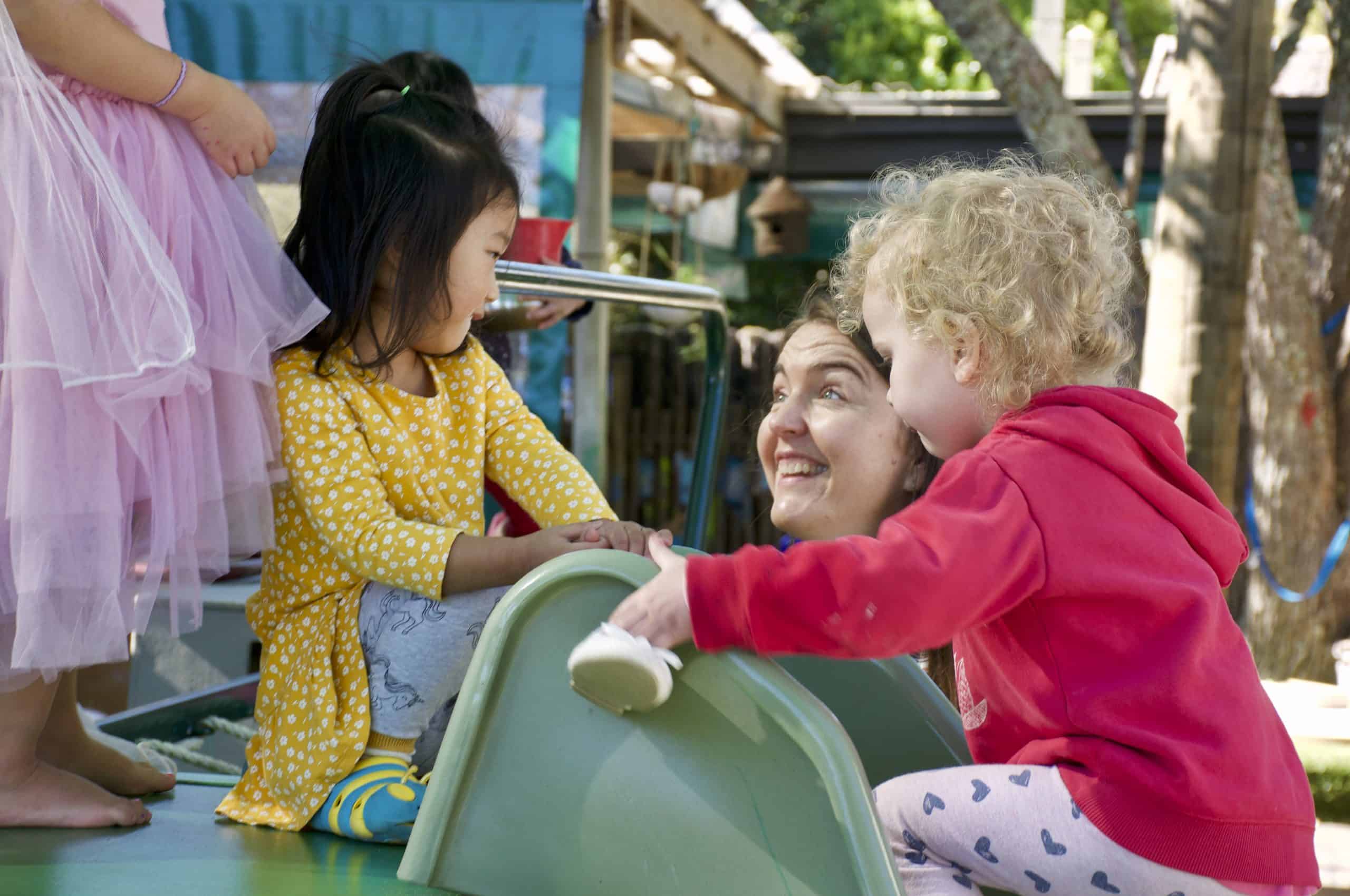
We pride ourselves on creating a ‘home away from home’ environment at Oma Rāpeti, where children can engage in self-chosen and self-initiated play. An outdoor environment and open-air play are essential for a healthy body, mind and spirit. Children are free to play outside in all weather as long as they are suitably dressed, and we go on adventures and explore our neighbourhood and community to further connect children to their natural world.
You can read our full Oma Rāpeti philosophy here.