
theteam@theeducationhub.org.nz
Postal Address
The Education Hub
110 Carlton Gore Road,
Newmarket,
Auckland 1023
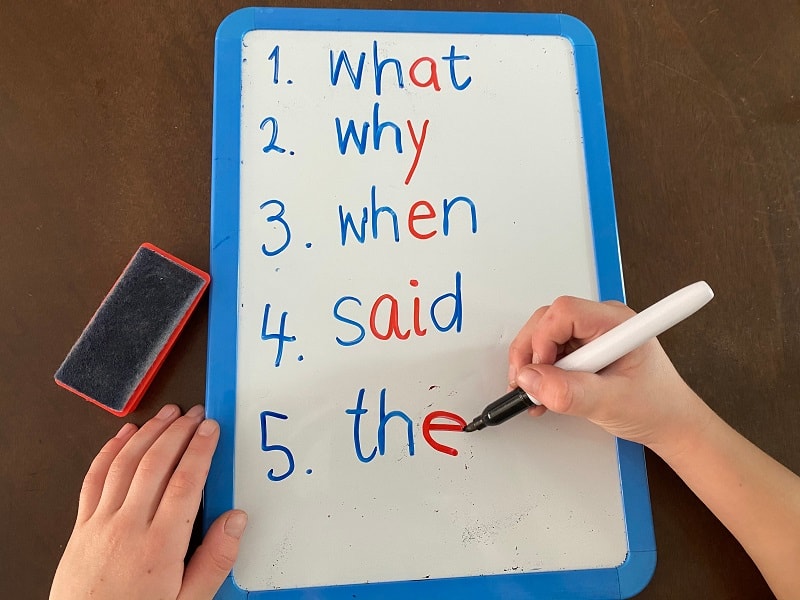
Spelling is key to success in writing, with very strong correlations between spelling skill and writing quality in the junior primary years. In the intermediate years, spelling and handwriting combined (together labelled ‘transcription skills’) continue to account for 41% of the difference in students’ writing fluency (or speed)[1].
The significance of spelling to writing may be best understood with reference to The Simple View of Writing, which summarises empirical findings related to writing development and identifies three sets of sub-skills that are essential:
All of this must be managed within the constraints of working memory, a memory system used in all new learning and problem-solving situations which may be thought of as the brain’s ‘desktop’, storing and managing all new information. Working memory is limited in its capacity which means that if transcription skills – spelling and handwriting – have not been practised to automaticity, these will likely occupy all of working memory and prevent the student from thinking about other things, such as the ideas they wish to express[3].
There are other reasons why spelling impacts on students’ writing. A misspelled word may blur the writer’s message, potentially influencing a teachers’ perceptions of the student’s ability and intelligence. In addition, a lack of spelling knowledge may lead to a student avoiding certain words, making it harder to precisely express their message. Finally, spelling difficulties may diminish a student’s confidence about their ability to write, which in turn may impact on motivation and cause them to avoid writing practice[4].
Spelling has been described as the ‘linguistic counterpart’ to decoding. It is a productive process which involves hearing sounds and representing them with letters, while decoding is a receptive process which involves seeing the letters and pronouncing the sounds. Spelling also contributes to reading development as it helps to develop students’ phonemic awareness (their ability to work with the sounds in words) and knowledge of the alphabetic principle (the ways sounds can be represented by letters). As knowledge of the spelling system grows, orthographic patterns (the ways sounds are spelt) will also be easier to remember[5]. Some researchers argue that decoding should always be taught from sound to print, as it is in spelling. The conventional print-to-sound approach for phonics can be seen as teaching the code ‘backwards’ for three key reasons: firstly, because many sounds are represented in different ways, and with more than just one of the 26 alphabet letters; secondly, because many alphabet names bear little resemblance to the sounds they represent; and thirdly because this approach does not follow the ‘logic of history’ according to which speech evolved at least 30 000 years before writing, and the alphabet was developed to record speech sounds[6]. Teaching from sounds first allows teachers to teach sound-to-letter relationships logically, acknowledge the diversity of sound-spelling relationships, and cover more content more efficiently by avoiding the ‘one-letter/one-sound trap’[7].
Empirical studies have demonstrated very strong correlations in the relationship between spelling and reading. In addition, experimental studies have shown that spelling instruction can improve word reading performance[8]. Given the importance of spelling to writing and reading, it is clear that the teaching of spelling should be a top priority in every classroom. This review provides a summary of the teacher knowledge required for the teaching of spelling, best practice instructional methods, and spelling assessment.
Because many teachers attended school during the ‘whole language’ era of literacy instruction, they may never have received explicit teaching about the code of written English. This can be a barrier to implementing effective programmes. In what follows, some key terminology is unpacked, and useful patterns and rules are explained. Key terms and concepts include phonemes, graphemes, vowels, consonants, syllables, digraphs, morphology, and etymology.
There are 44 sounds (phonemes) in spoken English, and 250 ways to write those sounds (graphemes). Many sounds can be represented in more than one way.The vowel sounds are made with an open mouth and no friction. They are represented with the letters a, e, i, o, u, and sometimes y. They can also be written with spelling patterns that include consonants (for example, the long i sound, igh, as in light). There is a vowel sound in every syllable, and this vowel sound is the ‘heart’ or ‘nucleus’ of the syllable.
Short vowel sound spellings are taught first as these are the most common and predictable spellings. The short vowel sounds are those found in cvc (consonant, vowel, consonant) words like cat, pet, fin, hot, and nut. The long vowel sounds are the sounds of the vowel letter names. These sounds are represented by one letter in single syllable words with no final consonant (for example, he, she, go). Most often, long vowel sounds are represented by more than one letter (for example the long a sound, spelt ai, in rain, and the long e sound, spelt ea, in beach). Other vowel sounds include the r-controlled vowels (for example in shark, girl, curl, learn, work); the ou/ow in house and down, and the oi/oy in coin and boy. Being able to work with vowels is very important for proficient spelling. Most of the complexity in spelling relates to the spelling of vowel sounds.
Consonant sounds are all the other sounds in English. They are made with friction, and we touch our tongue, teeth, or lips together to make these sounds.
Syllables sound like beats in words. We can feel syllables too: put a hand under your chin and notice that your jaw drops as you open your mouth to make the vowel sound. We can see syllables in words if we look for the vowel. Then we decide whether to break before or after the following consonant sound (tea-cher or teach-er).
Many sounds (phonemes) can be written in a number of different ways. Consider, for example, the different spellings of the long i sound in words like: pie, kite, light, my, buy, and kayak. Sometimes sounds are written with just one letter. They can also be written with two letters (adigraph), such as the sh in ship, or the ay in day. Sometimes a sound is written with three or four letters, such as the igh in light or the ough in through.
There are certain spelling rules to apply, most of which are for adding endings (suffixes) to words.
Four useful rules for basic spelling are:
The above section provides a very brief introduction to useful spelling knowledge, but many more patterns and rules should be taught. Teachers new to the explicit teaching of spelling might consider purchasing an evidence-based programme with enough detail to support daily lessons. Select one knowledge item a week to learn with your students. High quality programmes include Allcock’s Switch on to Spelling (2008)[10], Stone’s Spelling for Life (2021) [11], and Walls’s Spelling Made Simple, provided as an appendix to her book (2023) and published online at spellingmadesimple.thinkific.com.
A number of researchers have described spelling development on a continuum from learning to work with sounds (phonological awareness), to learning how these sounds are represented by letters (alphabetic principle), to learning about word structure and meaningful word parts (morphology) and word origins (etymology). Key priorities for teaching are to:
The following principles are important when implementing a classroom programme of spelling instruction.
Teachers should support students to analyse the sounds in words before learning to spell them, both because many sounds are represented in different ways, and with more than just one of the 26 alphabet letters (as outlined above), and because many alphabet names bear little resemblance to the sounds they represent. There are other reasons why starting with sounds is effective. Firstly, students come to school knowing more about spoken language and sounds than they do about print, so working from sounds first means teachers are connecting new knowledge with prior knowledge. Secondly, teachers can use the sounds in words as a trigger for recalling spellings. To use an analogy, we can use the 44 sounds of English as we would labels on a filing cabinet, helping us to retrieve the information easily. Finally, sound analysis will continue to be useful to advanced spellers, whenever they are required to write a word which is unfamiliar[12].
A common approach to teaching spelling is to have students memorise individual words, but teaching children about sound-to-letter correspondences and word structures makes spellings more memorable, and means that words can be learned as groups, rather than as individual units[13]. The memorisation of individual words is inefficient and would make it impossible to cover the 70 000 words required by literate adults[14].
Most sounds in English can be written in different ways, so if teachers tell students that ‘e is for egg,’ this will result in confusion when they encounter other words that include the letter e such as make, pear, or each. Instead, say things like, ‘e can represent the sound…’[15].
Whole Language theorists recommend that students listen to sounds to approximate spellings while writing. This can be highly problematic, especially when students need to record sounds that are not predictable in the way they are spelt. In this case, students will either record the sound incorrectly, or (in a worse-case scenario) become anxious about guessing at the word and making a mistake. Rather, teachers should explicitly teach sound-to-letter correspondences to enable them spell words correctly as soon as possible[16]. A ‘supported spelling’ routine is recommended, whereby teachers help the student to listen to sounds, encourage them to apply the knowledge they have, and show them the rest of the word[17].
Connecting auditory (sound), visual (print), and kinesthetic (touch) aspects will aid with memory and will make learning fun for children who love to move[18].
Some ideas for this include:
This is a well-established principle to help all learning ‘stick’. Students need to practise retrieving knowledge from memory before it is completely forgotten and needs to be taught again. This means that ten minutes of spelling instruction every day will be more effective than longer lessons once or twice a week[19]. It is highly recommended that daily spelling routines are built into classroom programmes. In a junior class, teach a whole-class lesson for about ten minutes every day. In the first 6 months, this should be focused on hearing sounds in words. Later, there should be a greater emphasis on writing the sounds.
In a middle or senior-school class, teach for 15-20 minutes a day. This could be a whole-class lesson if more targeted instruction in sound-letter patterns is included as a part of the reading routine. Target these lessons to meet the needs of students at the earlier stages of spelling development. More proficient spellers will benefit from revision. Revisit sound to letter patterns later in the day when teaching reading. If reading is taught groups, more proficient spellers can be extended during this small group time.
This routine, inspired by the work of Barbara Brann, can be used to teach early sound-letter correspondences, including short vowel and single consonant sounds and early digraphs (sh, ch, th, ng, ph, ck), and the skills of segmenting, blending, phoneme manipulation, and syllable identification[20].
You will need to collect a number of cvc, ccvc or cvcc toys or picture cards (pig, peg, dog, jet, frog, fish, ring, chips). Some other toys may be useful for just their initial sound and to provide opportunities to practise hearing more than one syllable (an apple for the short a, or a panther for the digraph th).
Choose three toys a day with which to practise the following skills. Choose just two activities to use each day during this whole-class time. Include more focused phonemic awareness work, when teaching groups during your reading session.
You could repeat this for a few different changes, including changes to the medial and final sounds: jet, pet, pot, pat, fat, fan, fin.
This routine, based on the work of Joy Allcock[21], takes ten minutes a day, and is best done from Monday to Friday.
Day 1: Introduce the sound or rule for the week
Work with your class to create lists of words with that sound or rule. Segment and spell words as the students suggest them.
For some sounds, you may end up with several lists of words with different spelling patterns (for example, for the long a sound, rain, day, frame, great, eight).
Read the lists and talk about the different ways the sound can be spelt.
Choose one spelling pattern to focus on for the week. Save other patterns for following weeks.
Day 2: Focus on word meanings
Re-read the list as a class. Remind students of the focus pattern or rule.
Choose 2-3 words from the list. Choose one topic to discuss, either the meanings of interesting words, changing the words by adding endings (swimming/swimmer), or changing tenses (swim, swam).
Don’t get too fussy about labelling words parts, or parts of speech (prefix, suffix, verb, noun etc). This can be detrimental to students’ confidence and motivation. Promote word consciousness and curiosity during this time. Encourage students to explain changes to meanings and tenses using their own words. Praise any questions about these complex concepts.
Follow up: Students could write their own definitions or put the words into sentences to show their meanings. They could create a ‘word map’ showing everything they know about a particular word.
Day 3: Small group work segmenting and writing words with the spelling pattern
Re-read the word list, then put it out of sight and say: ‘We are going to practise listening to the sounds and remembering how they are spelt.’
Choose 3-5 words from the list to work with. The students can:
Follow up: students can create a word-find for a friend.
Day 4: Small group work segmenting and spelling ‘heart words’
Focus on irregular high frequency words, not included in the week’s spelling pattern list. Heart words are high frequency words which have irregular spellings. For example, ‘they’ has the long a sound represented with ey – this is an irregular pattern.
This routine is similar to Day 3. The students can:
Day 5: Dictation
Re-read the word list, then put it out of sight and say: ‘We are going to practise listening to the words in a sentence and remembering how they are spelt.’
Use a dictated sentence (or sentences) which will challenge students to apply the spelling pattern they have worked on during the week, or in previous weeks.
Read the dictation three times, first at a natural pace. Next, read it slowly, two words at a time. Finally, read it once more at a natural pace. Prompt children to listen for the sounds and to think of the patterns they know. Prompt them to listen for the end of each sentence and to use a full stop.
At the end of the exercise, display the sentence on the board so that students can mark their own work. Allocate ticks for particular knowledge items (including some that every student will achieve). Say, for example, ‘Give yourself a tick if you started the sentence with a capital letter,’ and so on.
When selecting assessment tools, consider your purpose. To identify learning needs and plan future lessons, use a formative assessment tool that will support teachers to analyse students’ errors and identify gaps in knowledge. Some examples include Brann’s analysis grid for spelling, which takes the first ten errors in a writing sample and considers whether these demonstrate difficulty with phonemic awareness (they may have sounds missing or added) or a lack of knowledge of spelling patterns and rules. Other options include the Words Their Way series of real word tests, along with a marking schedule that supports teachers to identify knowledge gaps, or pseudoword tests such as Allcock’s. Pseudoword tests show teachers which sound-letter patterns the students know, and this information will not be confounded by words already memorised.
To gain some insight into how students are performing compared to same-age peers, summative assessment tools are used. Teachers can use well-established standardised tools such as the Schoenell, Hodder, or Morrison-McCall Spelling Scale.
Endnotes
[1] Graham, G., Berninger, V., Abbott, R., Abbott, S., & Whitaker, D. (1997). Role of mechanics in composing of elementary students: A new methodological approach. Journal of Educational Psychology, 89(1), 170-182;
Graham, G., Harris, K., & Fink, B. (2002). Contribution of spelling instruction to the spelling, writing, and reading of poor spellers. Journal of Educational Psychology, 94(4), 669-686.
[2] Berninger, V., Graham, S., Vaughan, K., Abbott, R., Begay, K., Byrd Coleman, K., Curtin, G., & Minich-Hawkins, J. (2002). Teaching Spelling and Writing alone and together: Implications for The Simple View of Writing. Journal of Educational Psychology, 94(2), 291-304.
[3] Berninger, V. (2016). Coordinating transcription and text generation in working memory during composing: Automatic and constructive processes. Learning Disability Quarterly, 22(2), 99-112.
[4] Graham et al., 2002.
[5] Ehri, L. (1989). The development of spelling knowledge and its role in reading acquisition and reading disability. Journal of Learning Disabilities, 22, 356-365.
[6] Moats, L. (1998). Teaching decoding. American Educator, Spring/Summer, 1-9.
[7] Allcock, J. (2008). Switch on to Spelling. Porirua: MJA Publishing, p. 14.
[8] Graham et al, 2002.
[9] This section is largely informed by Moats, L. (2010). From Speech to Print: Language Essentials for Teachers (2nd Edition). Baltimore: Paul Brookes.
[10] Allcock, 2008.
[11] Stone, L. (2021). Spelling for Life: Uncovering the Simplicity and Science of Spelling (2nd Edition). New York: Routledge.
[12] Allcock, 2008;
Brann, B. (2001). Working with Students with Learning Difficulties. Queensland: Merganza Training and Development.
[15] Allcock, 2006; Brann, 2001;
Joshi, M., Treiman, R., Carreker, S., & Moats, L. (2008). How words cast their spell. American Educator, (Winter 2008-2009), 6-16.
[17] Walls, H., & Braid C. (2023). Teaching Writing, Spelling, and Grammar: From Research to Practice. Wellington: Essential Resources (in press).
[18] Brann, 2001; Joshi et al., 2008;
Henry, M. (2003). Unlocking Literacy: Effective Decoding and Spelling Instruction. Baltimore: Paul Brookes.
[19] Jones, A., Wardlow, L., Pan, S., Zepeda, C., Heyman, G., Dunlosky, J., Rickard, T. (2006). Beyond the rainbow: Retrieval practice leads to better spelling than does rainbow writing. Educational Psychology Review, 28, 385-400.
[20] Brann, 2001; Joshi et al., 2008.
[21] Allcock, 2008.
By Dr Helen Walls