
theteam@theeducationhub.org.nz
Postal Address
The Education Hub
110 Carlton Gore Road,
Newmarket,
Auckland 1023
Our webinar with Professor Andrew Gibbons and Associate Professor Ricardo Sosa explored the insights of a TLRI funded study of Advanced Computational Thinking in the Manurewa High School Makerspace. The key ideas explored were:
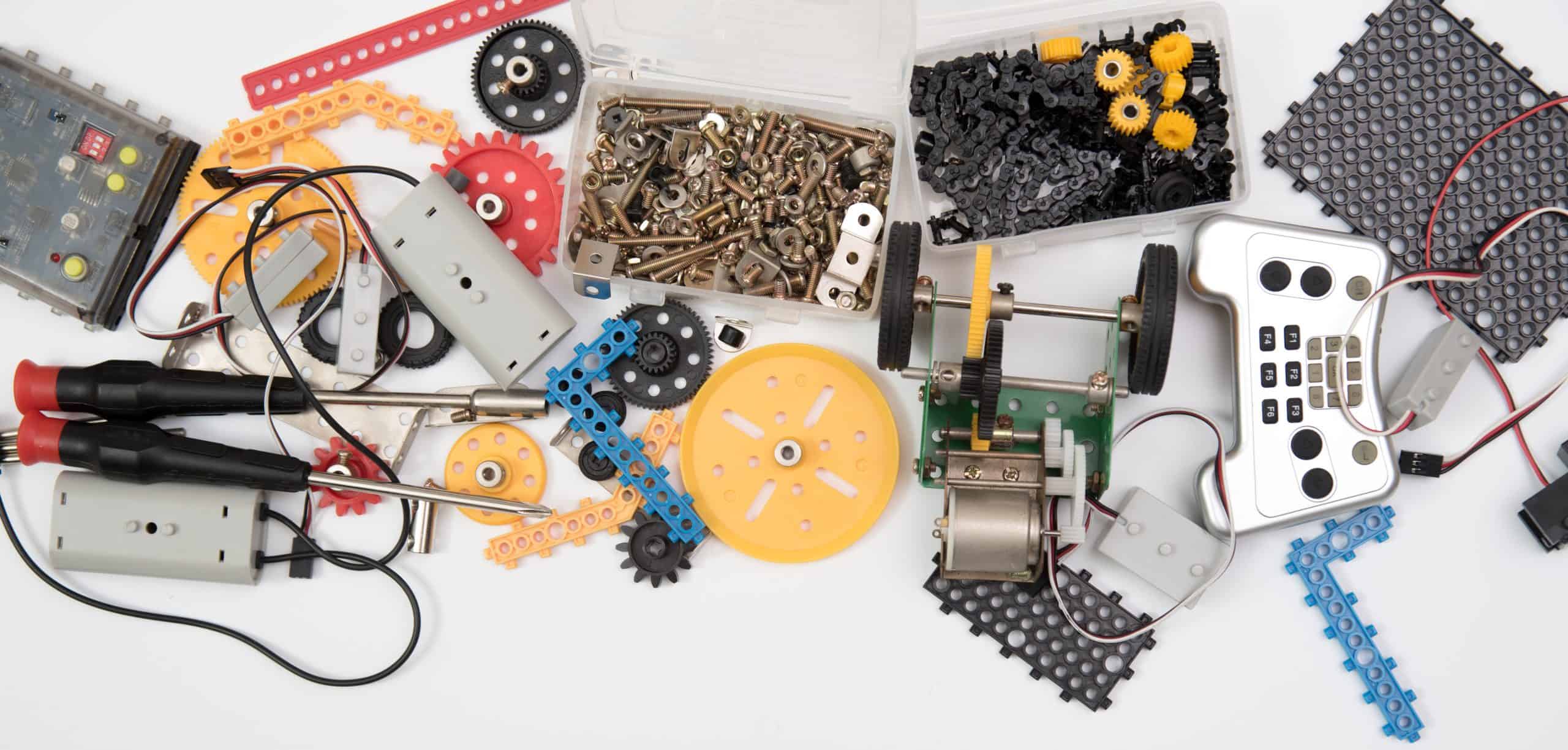
Makerspaces are often defined in relation to the equipment provided in a fabrication space for students, but other defining features of a makerspace include student, community, and whānau collaboration and student-led initiatives and projects. Makerspaces often are positioned outside of the formal curriculum, occurring outside of school hours and on a voluntary basis. At Manurewa High School the makerspace was formed under the Business Academy aimed at entrepreneurial and business initiatives for students, and related to designing and making products or services for the community. Other makerspaces have been focused on robotics, the sciences, social work, or health topics.
Computational thinking can be understood in a range of different ways but ultimately involves an algorithmic approach to understanding, processing, and communicating information in order to solve problems. It can involve identifying variables and noting patterns, as well as identifying simple rules or abstractions that help to solve problems or work through steps. Computational thinking can be applied in any curriculum subject, and is not restricted to a high-technology context. As an everyday example, making a sandwich involves working with variables and sequencing actions. Students’ interests and passions, such as art, or dance, or music, make a powerful foundation on which to explore computational thinking, whereas more traditional approaches to teaching coding can put students off. Computational thinking can be used as an analogy for the way that students apply their learning in most subjects too, in terms of collating information and searching for patterns in attempts to make sense of the world.
The concept of ‘advanced’ computational thinking was introduced to problematise notions that being better at computational thinking involves learning more about coding. It engaged with philosophical questions about what a reliance on algorithmic problem-solving might mean for future generations, and aimed to support students to look critically at the use of computational thinking. It supported students to reflect on when it might be important to resist the use of computational thinking, for example, in the context of more social or political problems. An advanced form of computational thinking was seen as an intentional engagement with history, social sciences, and humanities alongside technology.
Pedagogical strategies within this project were focused on constructivism and dialogical learning, based on the ideas of Seymour Papert and Paolo Freire. The aim was to present students with interesting situations and problems with which they could become highly engaged, and which they could transform and make their own.
The research at Manurewa High School’s makerspace also aimed to extend the often individualistic nature of coding and technological invention, and explore computational thinking within peer learning contexts. The relational elements of the makerspace were viewed as crucial, and much time was spend on establishing and maintaining relationships. As membership and commitment to the makerspace was voluntary, there was a strong emphasis on growing connections and collectiveness amongst students, and developing a strong community of making. The quality of relationship and depth of getting to know students as individuals was found to contribute to the ability of teachers and researchers to engage students in provocative conversations that extended thinking.
Slow pedagogies were important, so that teachers could come to know who their students were and find ways to support students to see themselves in the learning, in order to be fully engaged by it. Teachers saw their role as not providing authority and directing learning processes, but as elevating students’ own leadership within the space. They recognised that in this space some of the students knew more than them. Cultivating a beginner’s mindset, being curious about the unique ways in which students understood a topic, and suspending disbelief in regards to students possibly knowing more and being capable of teaching them were important pedagogical strategies. Rather than seeing and presenting themselves as experts in relation to students, teachers and researchers involved in this project found it was helpful to be prepared to reinvent themselves and to be open to questioning who they were and what they might be interested in and capable of. Humility and curiosity were key pedagogical values.
Computational thinking should not be constrained to prescriptive coding exercises, but embedded in holistic contexts and an interdisciplinary approach to curriculum. Computational thinking can and should be explored across the curriculum. Interdisciplinary ways of working emerge from shared interests. For teachers, developing authentic and meaningful interests with others can help to realise collegial conversations in an interdisciplinary space. This means seeking to work with people you admire, respect, and follow, spending time getting to know them, listening and talking, and sharing common ideologies, interests, and principles.
Computational thinking was seen more as an art than a finite series of functions. It was seen to be about being creative, and about artistic practices that connected with student’s creativity and personal identities, and promoted their wellbeing. The inclusion of computational thinking in the curriculum can provide a pedagogical opportunity to recognise students’ creative edges. This requires slow pedagogies, and lots of resource choice.
Rather than accepting the presence of technologies and teaching students about the use of technologies just because they exist and will be prevalent in students’ lives in the future, it may be more responsible to take a slower approach, investigating new technologies and how they work. With a basic understanding of how technologies work, students are more able to make informed decisions about whether to use them or not, and how to resist them. While the project did not advocate the teaching of coding, it is suggested that with a hands-on literacy of computer programming, students are empowered to push back against the large technology developers that currently monopolise the development of new technologies, and make decisions for consumers. This might help students to move beyond attitudes that embrace the new technologies simply because they have been developed.
Support from school leaders and from parents is crucial for the realisation of an effective community of making in a makerspace, especially where the selection and leadership of projects is to be handed to students. This means recognising and communicating the way in which peer engagement and leadership of a makerspace can amplify student engagement and desire to be at school, and the way that learning the basics of computation can support understanding of its impact on their lives and the lives of others.
Further resources
Snake-Beings, E., Gibbons, A., & Sosa, R. (2024). Expanding notions of computational thinking: The makerspace as a space of possibilities. Teaching and Learning Research computational Institute (or access the summary poster).