
Materials for play: A short guide to selecting loose parts
Teachers are responsible for choosing materials and tools for loose parts play, and their capacity for choosing and imagining the possibilities of materials impacts on children’s experiences. Materials are provocative: they evoke memories, provoke stories, invite actions and communicate suggestions for play. Materials also enable particular possibilities while resisting other: for example, using blocks evokes different ways of thinking and developing ideas than using paint and paper.
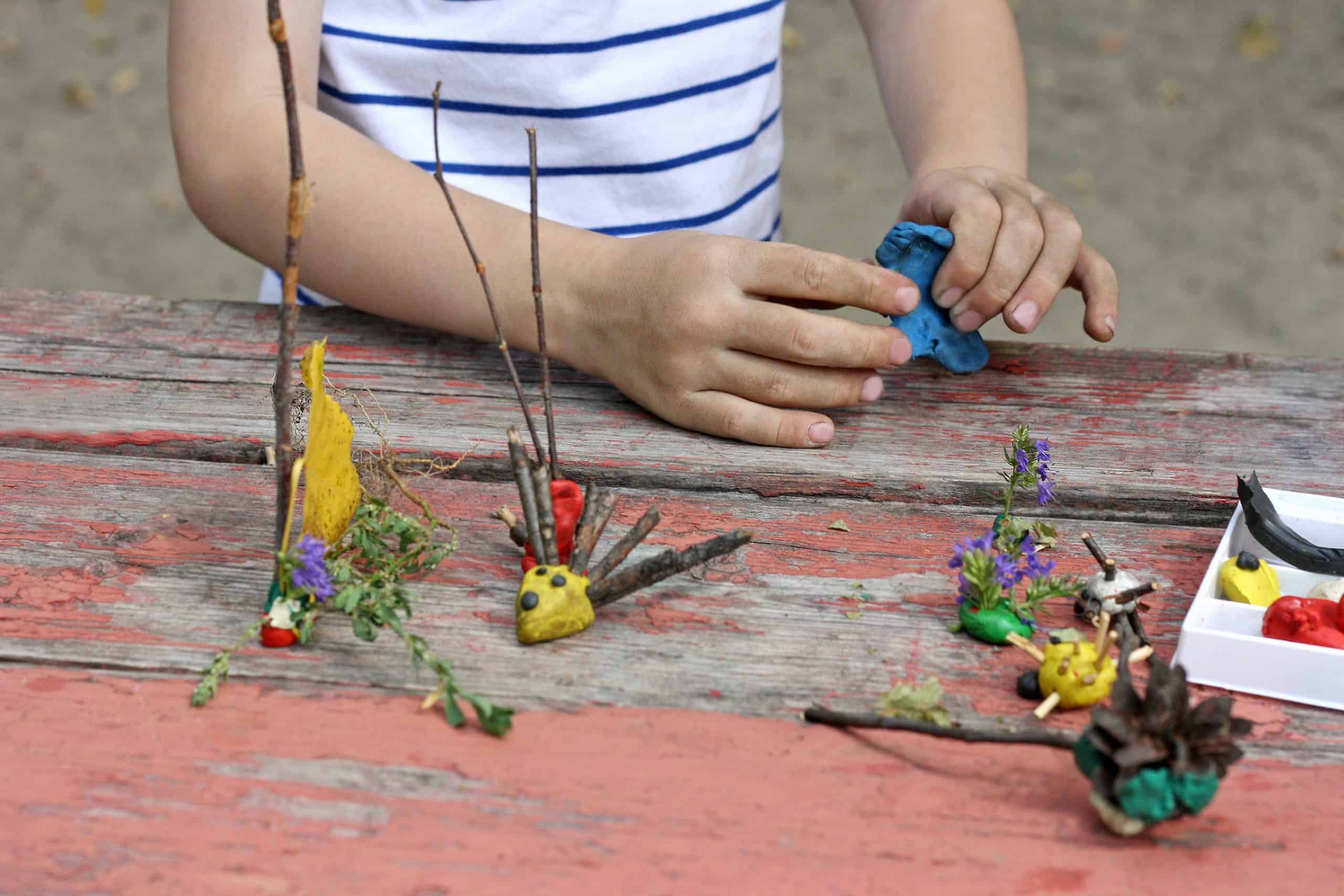
The variety and number of loose parts provided for children are thought to be related to the level of discovery and inventiveness possible as they explore. Use real, household items, found objects such as shells, and upcycled objects, such as tiles and ribbons, for open-ended potential and a breadth of experiences. Visit car boot sales and markets, and look for objects and materials with high affordance value. Dollar stores offer cheap resources including loofahs of different textures, glass stones, knotted tug ropes, and colourful transparent cups for playing with light. It is usually very simple materials which stimulate complex thinking and sophisticated and sustained play.
Try to tune into the possibilities of different materials and think about the following features when selecting loose parts:
- Sensory qualities. Consider objects made of a range of materials, including paper, wood, glass, stone, fabric, ceramics or metal. Look for objects to stimulate touch by using different textures, shapes and weights. Select materials for unusual features such as shape, surface or temperature. Natural items in particular offer rich opportunities to experience texture. Consider visual perception through colour, form, length and shininess, and reflect on the aesthetic value of objects, materials and collections. Stimulate smell through fragrant items such as lavender, dried flowers and spices, and introduce a range of sounds such as ringing, tinkling, scrunching and scratching by using everyday objects such as metal pans, trays, bells and cans, wooden spoons, aluminium pie plates and foil.
- Exploratory actions. Consider items that invite action, that can be moved, banged together, put inside one another, or rearranged. Use interesting loose parts that can be used to construct and design (but without glue or tape). Ensure there are also a good range of containers for toddlers, who will enjoy putting loose parts in containers.
- Multiple sets of objects and a high level of diversity in objects. Items that are useful in multiple sets are tree blocks, pine cones, floor samples (tile, carpet, wood), coasters, napkin rings, small wooden bowls, driftwood, marble eggs, and bunches of keys.
- Safety. Assess the size, durability and appropriateness of objects and materials.
Further reading
Daly, L., & Beloglovsky, M. (2015). Introducing loose parts to preschoolers. Teaching Young Children, 9(1), 18-20.
Hughes, A. M. (2010). Developing play for the under 3s: The treasure basket and heuristic play. London: Routledge.
By Dr Vicki Hargraves