
theteam@theeducationhub.org.nz
Postal Address
The Education Hub
110 Carlton Gore Road,
Newmarket,
Auckland 1023
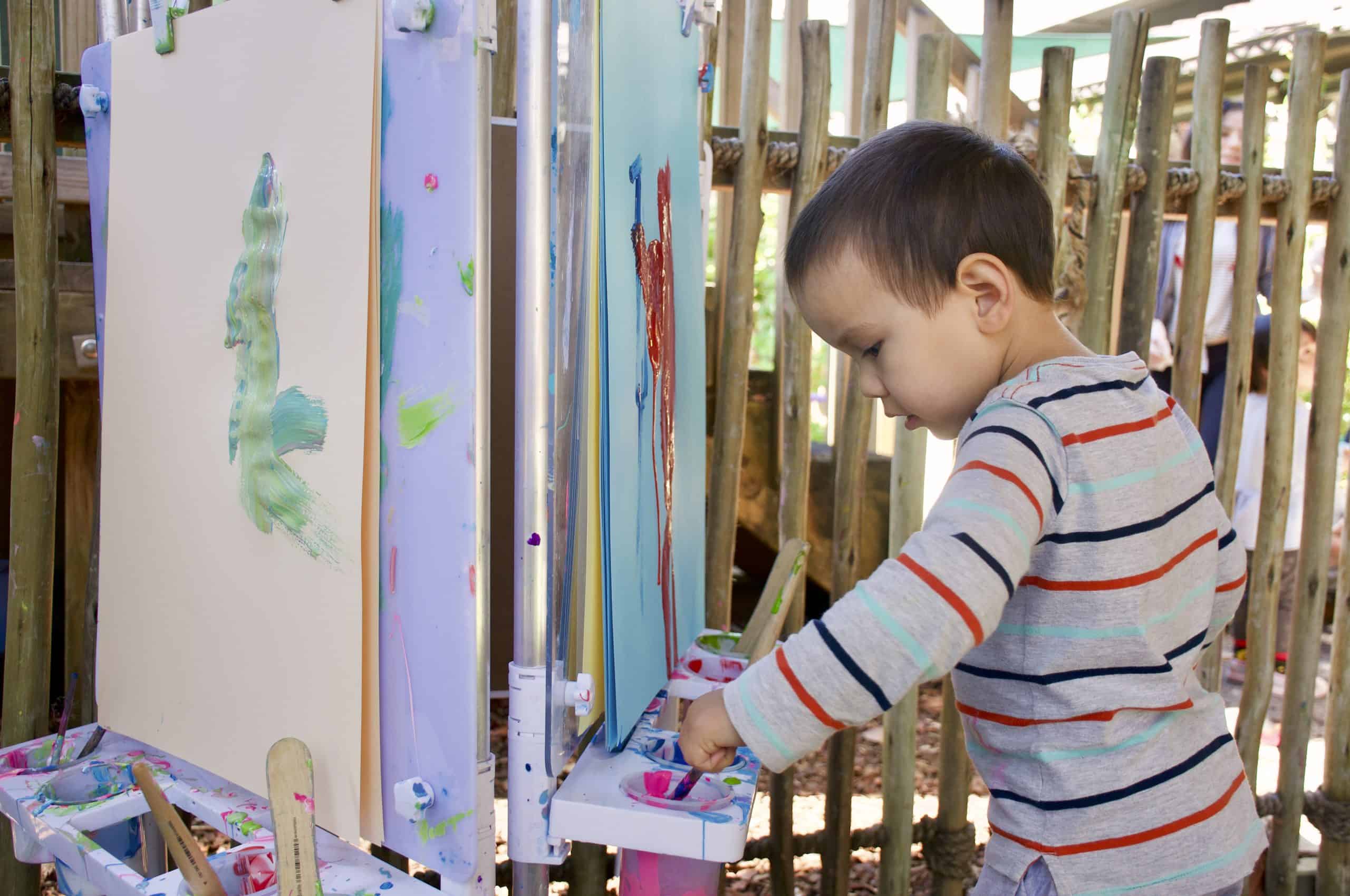
In our webinar, Dr Gai Lindsay, Dr Sarah Probine, and Dr Rachel Denee shared ideas, theories, and practical tips from their brand new book on visual arts education, co-authored with Denise Savins: Art Play and Inquiry: The Why, What and How of Visual Arts Education with Young Children. The book offers teachers and educators a deeper understanding of why the visual arts are important for learning and inquiring across the early childhood curriculum, and shares detailed information about what and how to offer quality arts experiences to children in early childhood settings.
The key insights are summarised here:
The visual arts play a central role in young children’s holistic development. Visual arts offer a vital medium through which children can express and develop complex thoughts and emotions, so that teachers can better understand, and therefore better respond to, children’s thinking. They are particularly important for children still developing verbal language or navigating a new linguistic environment. Without predetermined outcomes or modes of engagement, the visual arts offer a means of participation in which everyone’s contribution can be accepted, and are an important means by which children come to understand and develop their personal and cultural identity. There is particular potential for dialogue with the use of the visual expression and for the democratic exchange of ideas, in which children can learn to accept and appreciate a diversity of opinions and perspectives. Engaging with the visual arts also encourages dispositions for lifelong learning, such as persevering through challenges.
Access to the arts is a human right. The visual arts can be seen as important for enacting the rights of the child to express and make meaning, and to be connected to arts in their community and culture. Visual modes, metaphors, and languages are important in all communities, supporting people to express their identities and enhance their environments and lives through visual design, pattern, and colour.
Teachers and educators do not need to be naturally ‘arty’ to create meaningful art experiences. Creativity is a capability that can be nurtured in both children and adults through engagement with materials and guided exploration. It is not necessary for teachers and educators to position themselves as artists or experts, but instead they can act as co-researchers, supporting and participating in children’s artistic processes and role modelling curious dispositions and artistic play.
Adult involvement does not inhibit children’s creativity. The idea that teacher involvement in children’s art-making will damage or interrupt children’s creativity is a misconception, and usually based in (also erroneous) beliefs that creativity is something innate or magical. Instead, what is known about learning from a sociocultural perspective is that children construct knowledge and skills in collaboration with (often more knowledgeable) others in their community. The best artistic outcomes for children occur when teachers are actively engaged in co-research about possibilities with children.
Inquiry-based, co-research pedagogy is an effective approach to visual arts education. Successful visual arts experiences involve teachers in important roles prior to, during, and after the experience. Prior to art experiences, educators collaborate with colleagues to develop a shared understanding of pedagogical goals, thoughtfully select and explore the potential of the materials to offer, and plan intentional activities and interactions. During the experience, teachers are actively engaged, balancing observation with participation, providing space for experimentation but also support when needed. Simply being present, curious, and willing to experiment play a pivotal role in shaping children’s experiences and fostering a culture of creative exploration with materials and expression. Post-activity reflection and documentation are important for determining how to develop visual arts experiences and extend learning, as well as for informing future practice, and communicating outcomes to colleagues and families.
Teacher confidence and strong pedagogical content knowledge are essential for delivering quality visual arts experiences. For this reason it is important to engage in professional development and community arts courses, to visit and view artworks, and to get as much hands-on practice with materials as possible to gradually build familiarity, knowledge, and skills with a material. Teacher intentionality is key here, and simply beginning with small, intentional acts of playful engagement with materials can be powerful in raising confidence and competence. Teachers need enough knowledge to be able to set up arts experiences for success and to have a good sense of what materials can and might do in the hands of children (Part 3 of the book offers essential knowledge for engaging with children in a range of art forms). Greater understanding of art materials and techniques support teachers to scaffold and support children’s art-making.
The design and placement of art spaces or studios are important for supporting children’s engagement. Art spaces that are intentionally and thoughtfully arranged away from noisy or trafficked areas will support children to be purposeful, as well as offering them a space to store and revisit their work over time, which helps them to increase their technical skills and understanding. High-quality materials that are carefully curated support children to engage in repeated exploration and sustain their learning. The use of art forms and symbols that reflect children’s cultures can also support a sense of belonging. Art supplies need not be expensive – a carefully curated selection of leaves, or long-lasting items such as graphite pencils or willow charcoal can be economical choices.
Teachers’ presence in art spaces offers a range of benefits, including modelling playful exploration and discovery of the properties and possibilities of a medium or material, and opportunities to teach children how to value and care for creative tools. Teams need to develop a shared intention as well as strategies to enable one another to be present and fully engaged with children in art play. Intentional spaces and experiences for art play, and a pedagogy of co-research with children, has the potential to offer children rich, immersive experiences that enhance inquiry across the curriculum, and empower both children and teachers to build confidence and skill in the visual arts.
Further resources
Denee, R., Lindsay, G. & Probine, S. (2024). Visual arts self-efficacy: Impacts and supports for early childhood teachers. Early Childhood Education Journal, 52, 1035–1045. https://doi.org/10.1007/s10643-023-01489-5 [open access]
Lindsay, G., Probine, S., Denee, R., & Savins, D. (2025). Art Play and Inquiry: The Why, What and How of Visual Arts Education with Young Children. Routledge.
Probine, S., Perry, J., & McAlevey, F. (2025). Children’s inquiry in early childhood education in Aotearoa New Zealand New Zealand Council for Educational Research.