
theteam@theeducationhub.org.nz
Postal Address
The Education Hub
110 Carlton Gore Road,
Newmarket,
Auckland 1023
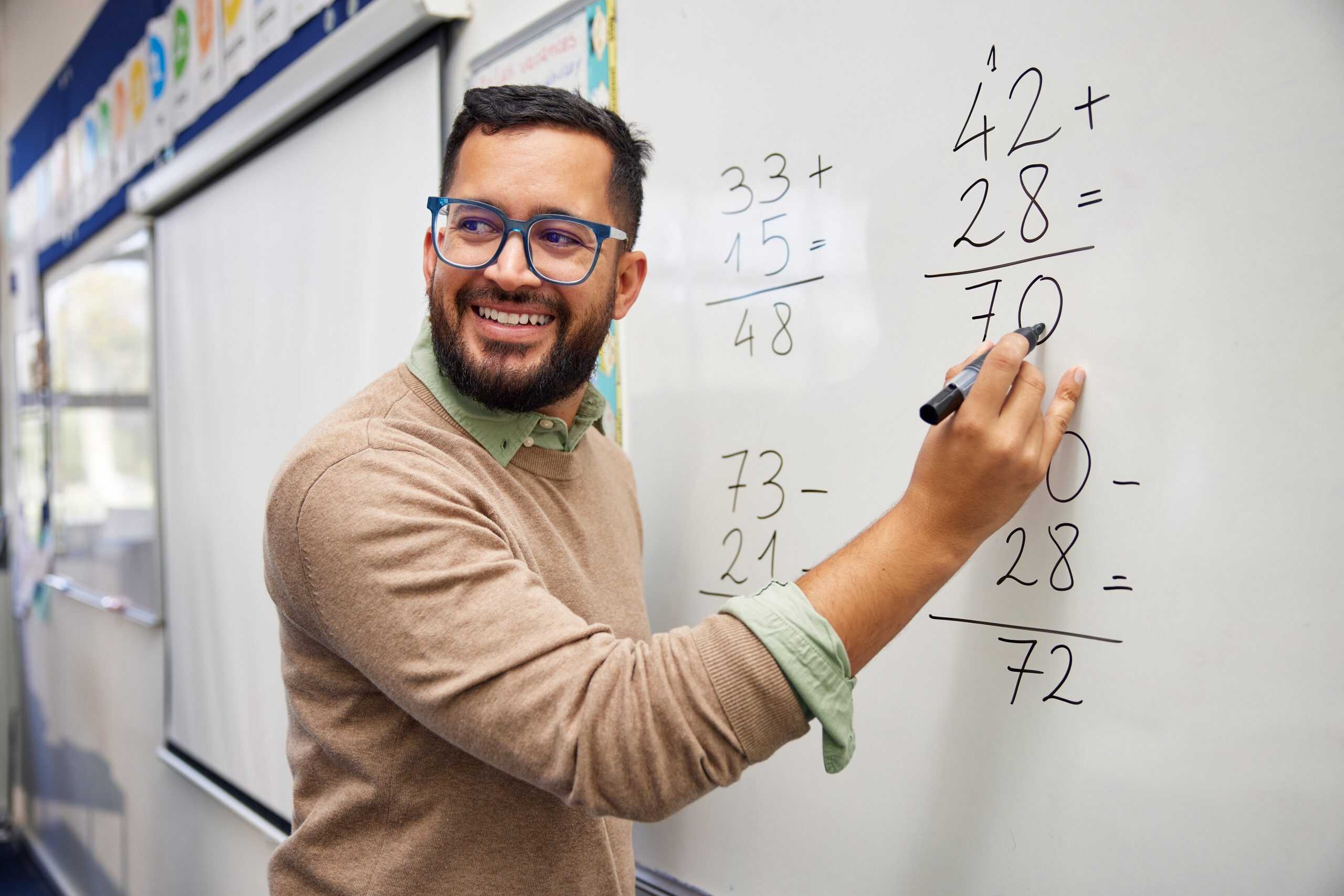
In a webinar, mathematics education researcher Associate Professor Tanya Evans gives some background to the competing approaches that have dominated maths educational research in New Zealand and other Western countries, and proposes a series of evidence-based strategies that should serve as the foundation for maths teaching and learning in schools.
Mathematics education research has been dominated in the past few decades by a paradigm divide. Mathematics education can be split in roughly two camps which use very different research methodologies. In one camp, researchers mostly draw on causal and correlational methodologies, using data to test statistical hypotheses and arrive at conclusions. They tend to use randomised control trials (the gold standard of the scientific method) or quasi- or natural experiments, but they also draw on qualitative data in the form of exploratory and evaluation studies that use interviews of teachers and focus groups with students and teachers. These qualitative methods are used to inform the hypotheses that are then tested using quantitative data. In order to publish in academic journals, findings need to be generalisable and replicable, so this is a feature of the work of this first camp.
The other camp uses primarily qualitative research methods based on interpretive frameworks. They collect and analyse similar qualitative data to the first camp, but they do not seek to be generalisable or replicable. Indeed, the same data can be analysed by two researchers using their subjective interpretations and perspectives, and completely different findings reached. Within this paradigm, the variability is not only accepted but celebrated. They also interpret validity and reliability differently to the first camp.
Collaboration and cross-pollination of ideas between these two camps would have been valuable and helped to progress the thinking about and development of practical approaches to teaching mathematics in schools, but unfortunately this has not been the case. The work of the second camp has dominated because it is much larger, compromising the vast majority of mathematics education researchers both in New Zealand and in other Western countries.
Human cognitive architecture is made up of three different types of memory: sensory memory, which processes incoming information through the senses; working memory, where conscious thinking happens; and long -term memory, which is used for long-term storage of knowledge and skills in hierarchical networks called schemas. The process of learning requires working memory to be actively engaged in the comprehension of the information in order for it to be encoded into the long -term memory. Working memory is extremely limited, capable of holding between four and seven separate items at one time, and of retaining them for a very short period. The limits of long-term memory are currently unknown, and one of the biggest breakthroughs in cognitive science over the last century has been that the limitations of working memory effectively disappear when information is pulled from long-term memory.
The role of long-term memory and expert explanations in teaching and learning have been significantly downplayed, leading to less effective teaching methods. Maths teaching has been dominated by so-called discovery or inquiry-based approaches, which require students to explore complex mathematical phenomena with minimal guidance from the teacher. There is no reliable evidence for these approaches, but a great deal of research that demonstrates that these approaches impose too much cognitive load for novice learners: because their working memories are overloaded by the need to try and process mathematical concepts and procedures without explicit guidance, these concepts and procedures are not effectively encoded in students’ long-term memories. Claims that discovery or inquiry-based approaches are more equitable are also unsupported by research (which has actually shown the opposite to be the case). Rich, inquiry-based tasks do have a place in maths teaching and learning, but they should come at the end of a unit when the students have a strong understanding of the concepts and procedures, not at the beginning.
The goal of education is to help students develop large, well-connected schemas in long-term memory. The more schemas we have, the better we think and the easier for us to learn, because learning builds on what we already know. Someone who is an expert in a particular area has very complicated, multi-dimensional schemas in their long-term memory, with very intricate connections between every single node. Research in cognitive science has extensively and emphatically demonstrated that the most effective pedagogical strategies for supporting students to encode information in well-organised schema in their long-term memory are explicit teaching (to avoid overloading working memory when learning new concepts and procedures), spaced retrieval practice (to strengthen memory traces), and in the case of maths in particular, timed maths activities (which promote fluency and automaticity). Some researchers have claimed that testing and the use of timed activities cause mathematics anxiety, but there is no robust evidence to prove this.
Evans, T. (2024, April 10). Maths teaching fails pupils by ignoring cognitive science findings [Expert Op-Ed]. Newsroom. https://newsroom.co.nz/2024/04/10/maths-teaching-fails-pupils-by-ignoring-cognitive-science-findings/
Evans, T., & Martin, G. (2021, December). The woeful state of mathematics education in Aotearoa New Zealand schools – a generation of New Zealanders has been failed. New Zealand Mathematical Society Newsletter, Number 143, 149-111. https://nzmathsoc.org.nz/downloads/newsletters/NZMSnews143_Dec2021.pdf?t=1639477486
Evans, T., & Dietrich, H. (2022). Inquiry-based mathematics education: a call for reform in tertiary education seems unjustified. STEM Education, 2(3), 221-244. https://doi.org/10.3934/steme.2022014
Gillon, G., Everatt, J., McNeill, B., Clendon, S., LaVenia, M., Evans, T., Smith, J., Gath, M., & Taleni, T. (2024). Accelerating Learning in Oral Language, Reading, Writing and Mathematics [Research Report for the Ministry of Education]. Child Well-being Research Institute. https://newzealandcurriculum.tahurangi.education.govt.nz/accelerating-learning-in-english-and-maths/5637255598.p
Mayer, R. E. (2004). Should there be a three-strikes rule against pure discovery learning? American psychologist, 59(1), 14. https://doi.org/https://doi.org/10.1037/0003-066X.59.1.14
McNeil, N. M., Jordan, N. C., Viegut, A. A., & Ansari, D. (2025). What the Science of Learning Teaches Us About Arithmetic Fluency. Psychological Science in the Public Interest, 26(1), 10-57. https://doi.org/10.1177/15291006241287726
Morrow, N., Rata, E., & Evans, T. (2022). The New Zealand mathematics curriculum: A critical commentary. STEM Education, 2(1), 59-72. https://doi.org/10.3934/steme.2022004
Sun, X., Norton, O., & Nancekivell, S. E. (2023). Beware the myth: Learning styles affect parents’, children’s and teachers’ thinking about children’s academic potential. npj Science of Learning, 8(1), 46. https://doi.org/10.1038/s41539-023-00190-x