
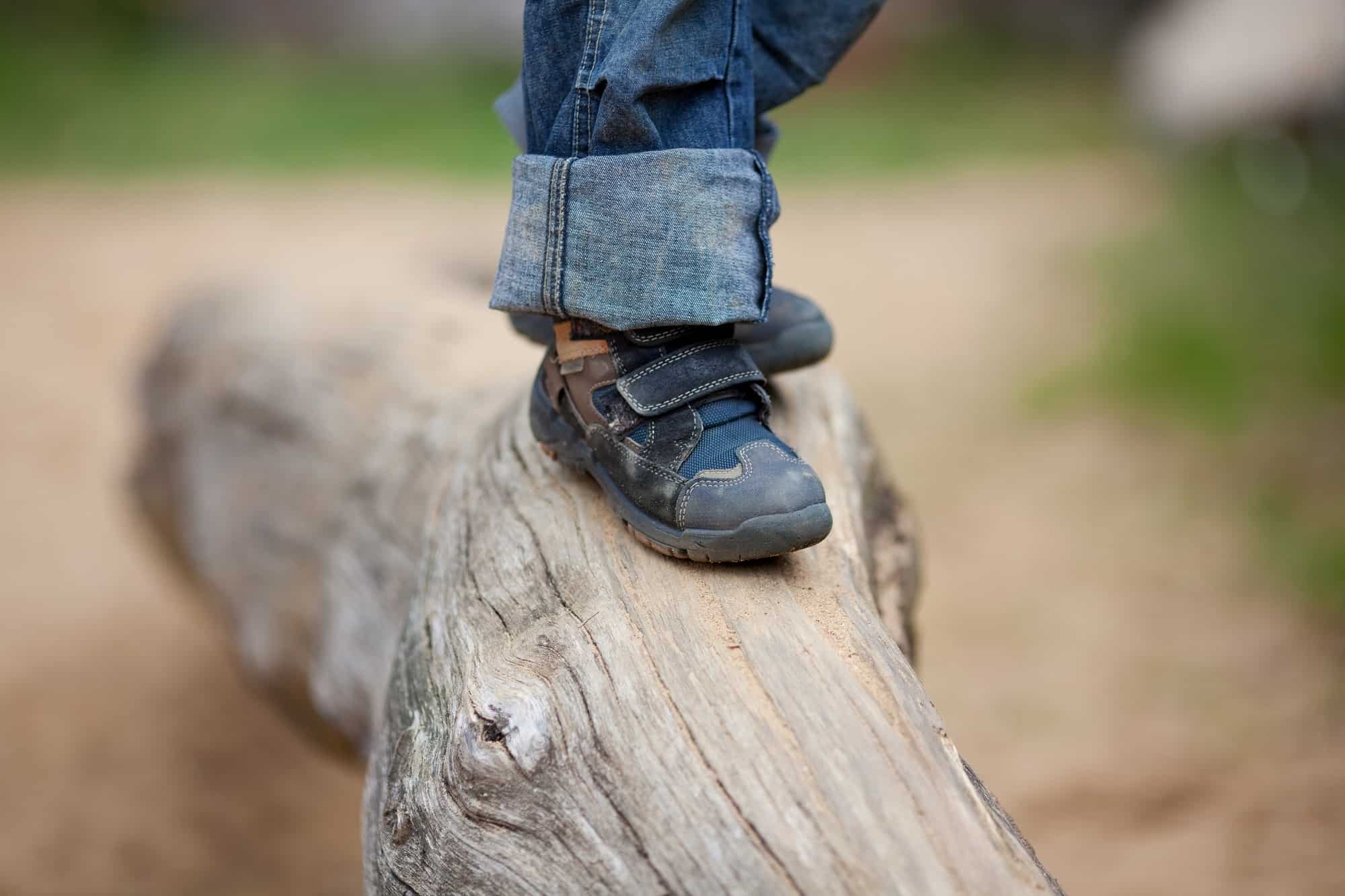
How can I help children make the most out of outdoor play?
Outdoor learning and being in nature are important childhood experiences that support learning and development. Teachers’ management and structuring of outdoor spaces is as important as providing access to the outdoors. For example, children’s ability to develop creative responses to outdoor resources is found to be largely dependent on the way in which teachers facilitate play, and teachers have significant influence in encouraging both children’s physical movement and activity and their sense of connectedness to the natural world. There are a number of ways that teachers can support children’s outdoor play.
Maintain a positive attitude to outdoor play
This is found to transfer to children, while teachers’ beliefs and own engagement with the outdoors are found to mediate the number and quality of opportunities for outdoor play. It is important to:
- demonstrate respect for, comfort with and
enjoyment of nature, and value outdoor learning as having the same potential to
support learning and development as indoor play
- understand the different ways that children interact with nature; for example, leaf and flower picking is a common stage of connection with nature, and can be seen positively as a step towards appreciating nature and developing an emotional connection to it
- closely observe children’s outdoor play, and document, display and publish the themes, ideas and narratives that children initiate with particular spaces and objects to become aware of the benefits of children engaging in outdoor play
Develop policies for outdoor play
The philosophies, policies and practices of early childhood settings and schools have a large influence on children’s outdoor activity level and on the kind of play behaviours and learning that children engage in. Policies might include statements outlining:
- the school or early childhood setting’s values with regard to outdoor play, and commitment to using outdoor spaces to develop children’s learning
- principles for practice, such as child-led activity, uninterrupted play sessions, and free movement between indoor and outdoor environments, found to be important for early childhood and early primary students
- links to priority learning outcomes and key competencies
- implications for supervision, such as allocating a teacher leader to the outdoor environment
- management of risk
- how families and communities might be involved
Balance safety with the benefit of risk
A focus on safety reduces the challenges and affordances of a space for children and can lead to children’s inappropriate risk-taking and thrill-seeking, while risky play is not shown to increase the likelihood of injury. Research demonstrates that children are capable of assessing risk, and risk-taking is found to have many benefits for children’s development, including self-confidence, independence and mental and social health. To maintain a balance between safety and risk, it is important to:
- emphasise learning outcomes related to risky
play such as negotiating turn-taking and learning to regulate personal safety;
for example, value children’s exploration of uneven terrains as helping
children to develop balance and resilience
- teach children to identify and assess risks such as how high to climb in a tree, helping them to think carefully about what could go wrong and to develop strategies to minimise risk (basing your response on knowledge about children’s capabilities, ability to make judgements and resilience), and encourage responsibility, for example, by discussing reasons for and against getting wet and muddy
Take trips to local parks and reserves
Thisprovides children with opportunities to experience nature. Focus on identifying and overcoming barriers to taking trips with children, such as lack of walking access, weather, time and supervision issues. Scout the area for possible sites to visit, which may even be a small unmaintained area onsite, or create your own small space of nature onsite. To enrich these experiences, you can:
- discuss what you notice in nature (sounds,
sights, textures, smells) or make collections of rocks, pinecones, leaves and
feathers
- revisit places so that an ongoing and deeper relationship to the place can be developed, and allow children to note and experience seasonal changes
Consider the affordances, or potentials for play of your outdoor play space
This may be children’s primary outdoor play experience, and therefore a critical influence on their learning and development.For example, trees with low branches afford climbing, whereas streams offer potential for leaping, splashing, damming and for making and dissolving mud pies. Affordances change with the weather and seasons, as well as with children’s changing perceptions and development: for example, a whole new range of affordances opens up once a child learns to walk.
Therefore it is important to:
- observe
children to see what affordances they perceive in their outdoor environment,
and reflect upon your role in making affordances accessible and in helping
children notice and explore different affordances
- ensure a diversity of landscape elements to provide a range of affordances
- provide moldable materials, climbable structures, shelters and loose parts (open-ended and manipulable objects and materials), both manufactured (such as milk crates and wooden boxes) and natural (pine cones, bark), and large and small scale; these allow children to construct spaces and dens and otherwise manipulate and shape their environment (supporting their dramatic play), engage in sustained interactions and discovery with natural elements (such as fallen branches), and engage in cooperative play and problem-solving (for example, moving logs may require multiple children)
- ensure the environment provides children with opportunities to be physically active: open spaces, looped pathways and equipment such as balls and bikes, are found to increase preschool children’s activity levels
What kind of pedagogies are most effective for outdoor play and learning?
First of all, it is important to ensure you develop and maintain strong relationships with children, as these are found to determine the way in which children react to the outdoor environment, influencing their confidence to make their own choices, solve problems and be independent from adults. Children’s independence in the outdoor environment is likely to free up teachers to engage in sustained interactions with children.
Make sure you encourage more playful and open-ended forms of engagement by offering children private space to engage in freely chosen activities without any intervention, and ensuring outdoor learning remains open to children’s constructions of play. For example, leave spaces unfinished to allow children to design and build, or have children help with setting up outdoor spaces. Free play and exploration, child-initiated learning and leisure activity are associated with more health benefits and positive attitudes than less playful styles such as field trips and school gardening projects, which are associated principally with educational benefits.
Aim for high levels of novelty, complexity and challenge which not only increase play activities and opportunities but are also preferred by children. Try things like an area of unmown grass, tyres, fabric, pipes and logs, blocks and milk crates for child-scale building. Insufficient space, equipment and materials are found to lead to boredom and aggression.
You can also support independent exploration and risky play by encouraging children to follow their own investigations and interests, and being careful not to convey expectations for behaviour, which have been found to limit children’s exploration and imaginative play in outdoor contexts. Separate tasks into small chunks for children to have success and build confidence. Develop routines that support children’s wellbeing and sense of safety, such as those involved in dressing and eating.
Don’t focus on supervision (standing back and keeping an overview of children’s activities) but get involved in children’s play. Collaborate with children in their self-chosen activity and engagement with risk, and aim to construct knowledge through collaborative inquiry and reflection. For example, use problem-solving opportunities that occur outdoors, such as making structures stronger or making windows for a den, to engage in sustained shared thinking and extend activities with children. Facilitate learning by asking questions and provoking ideas in ways that encourage children to think, theorise and make their own decisions.
Support children to develop a relationship with nature, by encouraging active learning and direct experiences that explore the joy and wonder of nature. Make maximum use of the materials available in nature: digging in mud, re-routing water channels, and making and adding to dens for role play using loose parts over a period of time.
Further Reading
Canning, N. (2010). The influence of the outdoor environment: Den-making in three different contexts. European Early Childhood Education Research Journal, 18(4), 555-566. doi: 10.1080/1350293X.2010.525961
Malone, K. & Tranter, P. J. (2003) School grounds as sites for learning: Making the most of environmental opportunities. Environmental Education Research, 9(3), 283-303, doi: 10.1080/13504620303459
Maxwell, L. E., Mitchell, M. R., & Evans, G. W. (2008). Effects of play equipment and loose parts on preschool children’s outdoor play behavior: An observational study and design intervention. Children, Youth and Environments, 18 (2) 3-63.
Sisson, J. H., & Lash, M. (2017). Outdoor learning experiences connecting children to nature: Perspectives from Australia and the United States. Young Children, 72(4), 8-16.
Waller, T. (2007). ‘The trampoline tree and the swamp monster with 18 heads’: Outdoor play in the Foundation Stage and Foundation Phase. Education 3-13, 35(4), 393-407, doi: 10.1080/03004270701602657