
theteam@theeducationhub.org.nz
Postal Address
The Education Hub
110 Carlton Gore Road,
Newmarket,
Auckland 1023
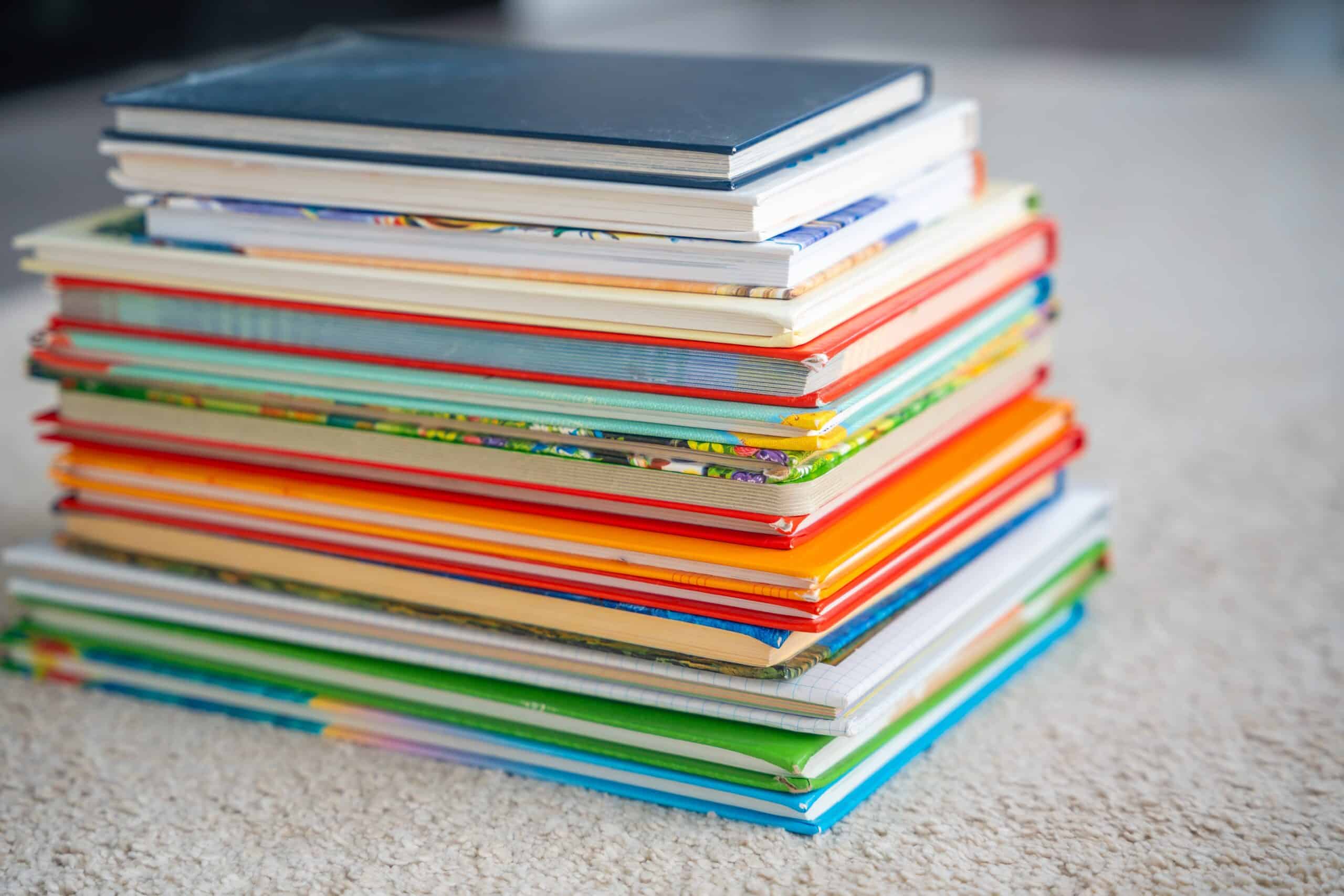
In a webinar, Dr Christine Braid from Massey University talked about the many benefits of reading for primary aged students, and shared a series of recommendations of great books for shared and independent reading in primary schools.
There are limitless benefits to reading and sharing books with children of all ages. Not only are there benefits for literacy, as reading helps with learning vocabulary and sentence structure, but reading offers comfort and enjoyment, and helps us understand ourselves and the world. Stories help students to develop and expand their imaginative lives, and learn to deal with things in their lives that are challenging or confusing.
Below are lists of the books that Christine talks about and recommends in the webinar.
Poetry and nursery rhymes
The importance of starting with nursery rhymes and poems (in home languages as well as English) should not be underestimated. Nursery rhymes and poems are powerful exemplars of how language works, and can influence how we learn to write, because their rhythm and rhyme help us learn to craft good sentences. Fairy tales and legends are important holders of our cultural heritage, and often legends exist across cultures (for example, most cultures have a flood myth, and the Cinderella story exists in both European and Chinese culture). Fairy tales are important because they often touch on deep fears that children have, but they also contain a message of hope and help children learn not to be afraid.
The Oxford Book of Poetry for Children (various editions)
I’m Glad the Sky is Painted Blue: Poems for the Very Young selectedby Rosalyn Barnett, illustrated by Robyn Belton
Seagull Seagull by James K. Baxter
Roger was a Razor Fish and Other Poems compiled by Jill Bennet, illustrated by Maureen Roffey
Poems to Read to Young New Zealanders illustrated by Claire Bowes
The Fairy Tale Treasury by Raymond Briggs
The Tin Can Band and Other Poems by Margaret Mahy, illustrated by Honey de Lacey
Sky in the Pie by Roger McGough
When We Were Very Young & Now We Are Six by A. A. Milne
My Very First Mother Goose by Iona Opie, illustrated by Rosemary Wells
Hard-boiled Legs: The Breakfast Book by Michael Rosen, illustrated by Quentin Blake
Here’s a Little Poem by Jane Yolen and Andrew Fusek Peters, illustrated by Polly Dunbar
Classics
Children’s classics are wonderful for the richness of the language they offer readers, and for the window into the world of history they provide. They often feature children who are unsupervised and go off on wonderful adventures, which speaks to the urge we all have to go on adventures. Another common theme that we can relate to is the feeling of powerlessness that the characters of classic children’s fiction experience.
The Wolves of Willoughby Chase by Joan Aiken
Peter Pan by J. M. Barrie
Alice’s Adventures in Wonderland and Through the Looking Glass by Lewis Carroll
The Wind in the Willows by Kenneth Grahame
The Lucy and Tom series and the Alfie and Annie Rose series by Shirley Hughes
The Jungle Book and Just So Stories by Rudyard Kipling
The House at Pooh Corner and Winnie-the-Pooh by A. A. Milne
Anne of Green Gables by L. M. Montgomery
The Railway Children and Five Children and It by E. Nesbit
The Little Prince by Antoine de Saint-Exupéry
Picture books
Reading aloud and sharing books together in class is a valuable activity, and picture books are great for older as well as younger children because they stimulate rich discussion. Students need to interpret the pictures as well as the words, as the meaning of the story comes from the interplay of words and images. This can be particularly fruitful when the words and images appear to tell a different story, or when the illustrations convey meaning and ideas that are not expressed by the words of the story.
Each Peach Pear Plum by Joyce & Allan Ahlberg
My Cat Maisie by Pamela Allen
Who Sank the Boat by Pamela Allen
The Important Book by Margaret Wise Brown, illustrated by Leonard Weisgard
Mr Gumpy’s Outing by John Burningham
I Want a Pet by Lauren Child
Song of the River by Joy Cowley
My Cat Likes to Hide in Boxes by Lynley Dodd
The Gruffalo by Julia Donaldson and Axel Scheffler
The Snow Lambs by Debi Gliori
The Kuia and the Spider by Patricia Grace, illustrated by Robyn Kahukiwa
Little Mouse’s Big Book of Fears by Emily Gravett
Rosie’s Walk by Pat Hutchins
Don’t Forget the Bacon by Pat Hutchins
The Great Paper Caper by Oliver Jeffers
Taniwha by Robyn Kahukiwa
I Want My Hat Back by Jon Klassen
Bubble Trouble by Margaret Mahy, illustrated by Polly Dunbar
The Man Whose Mother Was a Pirate by Margaret Mahy, illustrated by Margaret Chamberlain
A Lion in the Meadow by Margaret Mahy, illustrated by Jenny Williams
Have You Seen Tomorrow by Kyle Mewburn, illustrated by Laura Bee
The Book with No Pictures by B. J. Novak
Not a Box by Antoinette Portis
The Dot by Peter H. Reynolds
Ish by Peter H. Reynolds
Red Ted and the Lost Things by Michael Rosen and Joel Stewart
Where the Wild Things Are by Maurice Sendak
Shark in the Park by Nick Sharratt
Dogfish by Gillain Shields, illustrated by Dan Taylor
Swirl by Swirl by Joyce Sidman, illustrated by Beth Krommes
The Wonky Donkey by Craig Smith, illustrated by Katz Cowley
They All Saw a Cat by Brendan Wenzel
A Stone Sat Still by Brendan Wenzel
Chapter books for younger readers
Early reading experiences for young children should offer them comfort, help them learn about people and relationships, and show them characters having small but realistic adventures. They can help children who feel small realise that they live big lives, and teach them how to have high but realistic hopes.
The Mystery of Mr Jones’s Disappearing Taxi by Joan Aiken
Olda da Polga by Michael Bond
A Bear Called Paddington by Michael Bond
The Lily the Elf series by Anna Branford, illustrated by Lisa Coutts
The Violet Mackerel series by Anna Branford, illustrated by Sarah Davis
Flat Stanley by Jeff Brown
Runaway Ralph by Beverley Cleary
The Shrinking of Treehorn by Florence Parry Heide
Wemberley Worried by Kevin Henke
Chips and Jessie by Shirley Hughes
Toys Go Out by Emily Jenkins
The Frog and Toad series by Arnold Lobel
The Judy Moody series by Megan McDonald, illustrated by Peter H. Reynolds
Little Bear’s Friend by Else Holmelund Minarik
The Littles by John Peterson
Little Old Mrs Pepperpot by Alf Prøysen
The Tale of Peter Rabbit by Beatrix Potter
Tales of Little Grey Rabbit by Alison Urley
The Tenth Good Thing About Barney by Judith Viorst
Chapter books for slightly older readers
As children get older, they can start to learn about the richness and complexity of life through books. They can learn to deal with difficulty and contradiction, as well as seeing the joy that life can hold.
The Midnight Fox by Betsy Byars
The Clarice Bean series by Lauren Child
Fantastic Mr Fox by Roald Dahl
Danny the Champion of the World by Roald Dahl
Because of Winn Dixie by Kate DiCamillo
Flora and Ulysses by Kate DiCamillo
The Miraculous Journey of Edward Tulane by Kate DiCamillo
Harriet the Spy by Louise Fitzhugh
Just Juice by Karen Hesse
The Turbulent Term of Tyke Tiler by Gene Kemp
Stig of the Dump by Clive King
From the Mixed-Up Files of Mrs Basil E. Frankenweiler by E. L. Konigsburg
Non-stop Nonsense by Margaret Mahy
Skunk and Badger by Amy Timberlake, illustrated by Jon Klassen
The Mennyms by Sylvia Waugh
Charlotte’s Web by E. B. White
Picture books for older readers
Picture books contain a careful balance of pictures and words, and students can learn to skillfully interpret how the two work together, or sometimes in contradiction, to tell a complex story. In some cases, such as Jeannie Baker’s books, there are no words at all, and the students are offered rich opportunities to use their knowledge and experiences to infer and make meaning. Even the endpapers of a picture book can succinctly express the change that occurs from the beginning to the end of the story. Students can also be encouraged to notice examples of symbolism and figurative language in picture books.
Window by Jeannie Baker
Home by Jeannie Baker
Rhythm of the Rain by Grahame Baker-Smith
Wild is the Wind by Grahame Baker-Smith
The House that Jack Built by Gavin Bishop
Voices in the Park by Anthony Browne
Meanwhile by Jules Feiffer
Rose Meets Mr Wintergarten by Bob Graham
Weslandia by Paul Fleishman, illustrated by Kevin Hawkes
The Iron Man by Ted Hughes
Black and White by David Macauley
Shortcut by David Macauley
Baloney by Jon Scieszka, illustrated by Lane Smith
The Stinky Cheese Man and Other Fairly Stupid Tales by Jon Scieszka, illustrated by Lane Smith
The Rabbits by John Marsden, illustrated by Shaun Tan
Memorial by Shaun Tan
Rules of Summer by Shaun Tan
The Fisherman and the Theefyspray by Jane Tanner
The Big Book of Happy Sadness by Colin Thompson
Luke’s Way of Looking by Nadia Wheatley and Matt Ottley
Fox by Margaret Wild and Ron Brooks
Owl Moon by Jane Yolen, illustrated by John Schoenherr
Novels for older readers
As children become more mature readers, they can be encouraged to look for connections and themes across books, and think about questions such as when and how a character changed.
They can consider whether the timeline is linear or not, and explore the perspective or perspectives of the narrator(s).
Skellig by David Almond
My Name is Mina and I Love the Night by David Almond
Al Capone Shines My Shoes by Gennifer Choldenko
Al Capone Does My Shirts by Gennifer Choldenko
The Wanderer by Sharon Creech
Raymie Nightingale by Kate DiCamillo
Two Weeks with the Queen by Morris Gleitzman
Once by Morris Gleitzman
After by Morris Gleitzman
The Endless Steppe by Esther Hautzig
The Phantom Tollbooth by Norton Juster
A Wrinkle in Time by Madeleine L’Engle
Tomorrow When the War Began by John Marsden
Island of the Blue Dolphins by Scott O’Dell
Wonder by R. J. Palacio
Bridge to Terebithia by Katherine Paterson
Tom’s Midnight Garden by Philippa Pearce
Pax by Sara Pennypacker
The Explorer by Katherine Rundell
Rooftoppers by Katherine Rundell
The Wolf Wilder by Katherine Rundell
Holes by Louis Sachar
Small Steps by Louis Sachar
The Boy Who Was Afraid (or Call it Courage) by Armstrong Sperry
Maniac Magee by Jerry Spinelli
Stargirl by Jerry Spinelli
The Secret Diary of Adrian Mole, Aged 13 and ¾ by Sue Townsend
References
Here are the other titles that Christine referenced during the webinar:
Braid, C. & Finch, B. (2015). ‘Ah, I know why …’: Children developing understandings through engaging with a picture book. Wiley Online Library.
Butler, D. (1980). Babies need books. Penguin Books.
Butler, D. (1986). Five to Eight: A Guide to Sharing Books with Young Children. Bodley Head Children’s Books.
Chambers, A. (1993). Tell me: Children, Reading and Talk. Stenhouse Publishers.
Mangan, L. (2019). Bookworm: A Memoir of Childhood Reading. Vintage.
Meek, M. (1988). How Texts Teach What Readers Learn. Thimble Press.
Nodelman, P. (2003). The Pleasures of Children’s Literature (3rd edition). Pearson.
Rundell, K. (2019). Why You Should Read Children’s Books, Even Though You are So Old and Wise. Bloomsbury.
Reading Spine. 5-Plagues-Reading-Spine.pdf.