
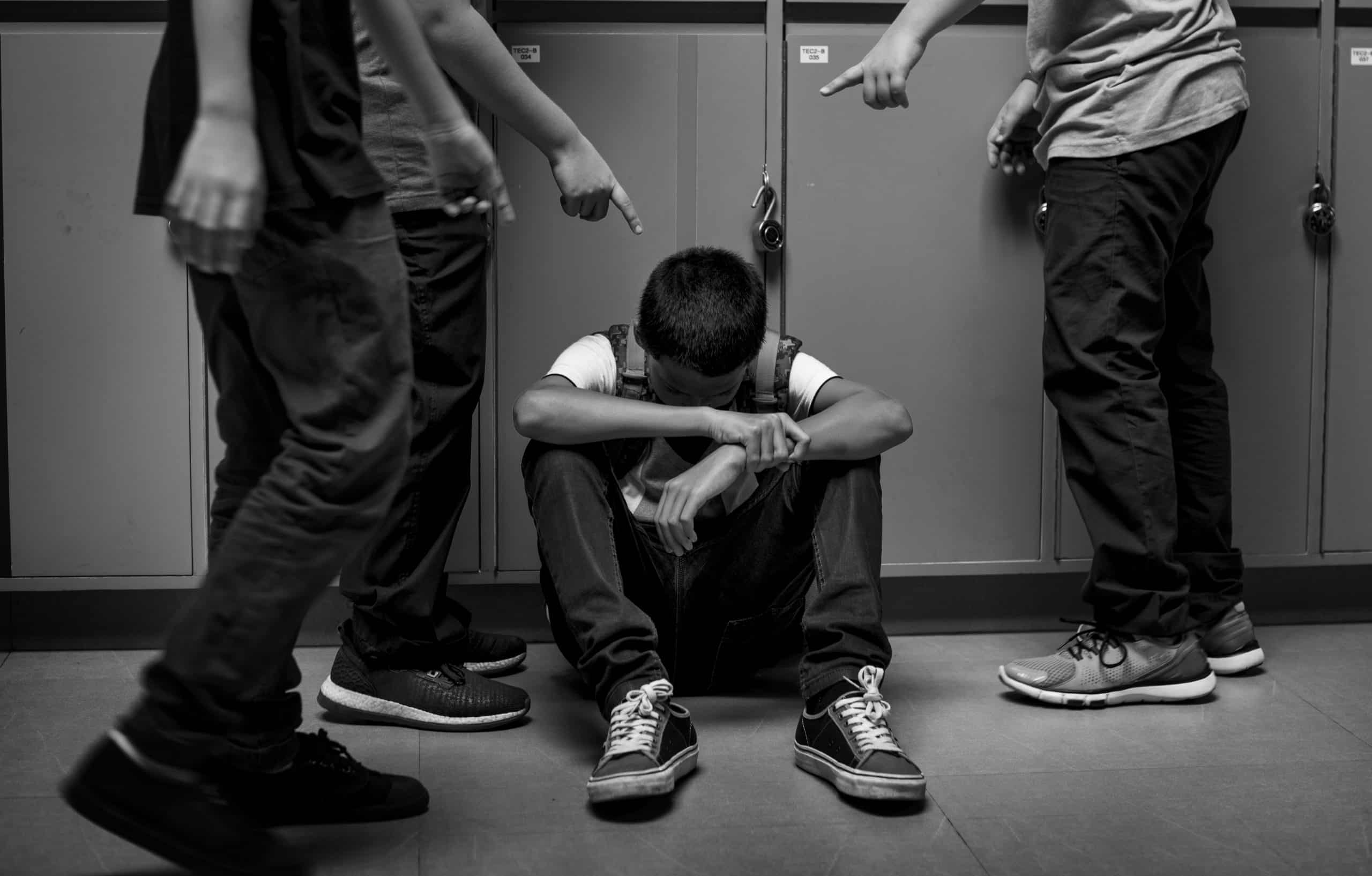
Bullying in secondary school
You may have heard the saying “adolescence – it was the best of times; it was the worst of times”. The teenage years are full of transitions and changes: children become young adults, they have to make difficult decisions about their future academics and careers, they develop intimate friendships and relationships, and the freedom to explore their independence and identity. With these changes comes responsibility and boundaries and a decrease in aggression and bullying behaviours as teens become emerging adultsi. However, the prevalence of bullying in secondary-age students is still alarmingly high with 31 percent of students reporting having been bullied and 58 percent reporting to have witnessed someone else being bullied at their current schoolii.
What is bullying? describes the four essential characteristics that define bullying with some concrete examples of bullying behaviours. This research review will help teachers understand how bullying behaviours develop during early adolescence to young adulthood (13-18 years), how to spot bullying behaviours, strategies to prevent bullying from occurring, and effective ways to address bullying when there is a need for intervention.
| Activity: Why do you think teenagers bully? |
| The purpose of this activity is to consider the function of a teenager’s bullying behaviour. All behaviour serves a purpose and as children get older, the reasons they use aggressive and bullying behaviours change. When we understand why they are bullying and what they are trying to achieve, we can relate to their behaviours and put strategies in place to prevent it from escalating. |
Understanding bullying behaviours in adolescence
Secondary schools tend to be larger than most primary schools. Students have several teachers, and move amongst several class groups throughout the day. These factors can make it very difficult for teachers to know about friendship groups and dynamics: there is greater anonymity and there are more opportunities for students to feel unsafe. It can also be difficult for adults to identify why students are using bullying behaviours. Generally, teenagers like to keep to themselves, their behaviours and conversations become more hidden and private, and their relationships with teachers and caregivers become more egalitarian, interdependent, and reciprocal. Adolescence is also a time of uncertainty, insecurity, and finding one’s identity. For these reasons, school is an important space for students to develop strong relationships with at least one caring adult, and it is important for teachers to build a culture of belonging and safety.
How to spot bullying in secondary schools
Adolescent intimate friendship groups are often characterised by self-disclosure, and this increases the opportunities for peers to use private, sensitive, and personal information to cause harm. This might be in the form of spreading rumours or lies, calling peers derogatory names, excluding peers, and using technology to cause hurt and harm. These behaviours are often more difficult for teachers to see, particularly in public places such as the playground, hallways, stairwells and whārepaku (toilets) where there is less monitoring of student behaviour.
During adolescence, there is generally a decrease in physical bullying behaviours because they are much less acceptable and there are clearer consequences to being physically aggressive with peers. Physical aggression can be one-off or an ongoing bullying behaviour. Physical aggression may occur in the heat of the moment in reaction to another event or behaviour. Physical bullying, on the other hand, is physical aggression delivered repeatedly overtime, and there is a power imbalance between the perpetrator and victim of aggression. When students aren’t taught alternative, nonviolent behaviours to solve conflict, these physically aggressive behaviours are likely to become bullying behaviours. Some students will replace physical behaviours with discrete verbal, non-verbal and relational bullying behaviours.
Cyberbullying is a growing concern and continues to increase as students gain more access to technology. Cyberbullying is any bullying behaviour delivered through technology including text messages, instant messaging, social media, email, websites etc. It can be difficult for teachers and parents to ‘see’ cyberbullying going on, making it important for caregivers to have regulations around the use of technology and informing students about what cyberbullying is and that it is not ok. The permanent nature of the internet and ease in sharing harmful information means the effects of bullying are likely to be long-lasting and may have a spill over effect into harmful bullying behaviours at school.
Bullying behaviours can occur in classrooms, although classrooms where most students are included in activities, and teachers are warm, responsive, and quick to respond to bullying behaviours, will provide fewer opportunities for students to engage in bullying behaviours. Unlike public spaces, the classroom is a space where teachers can monitor students’ behaviours closely, respond to any negative or concerning behaviours, and develop a positive classroom climate that promotes respectful positive relationships.
As we know, the teenage years are often turbulent and adolescents can experience challenging times for lots of reasons to do with social issues, puberty and family matters, among other things. This makes it difficult for caregivers to identify ‘unusual’ behaviour that might be caused by bullying. Some signs and symptoms that may indicate that bullying behaviours are occurring include:
- Unexplainable injuries, or lost or damaged belongings or clothes
- Frequent complaints of headaches or feeling sick, or faking sickness
- Avoiding lessons that require peer interaction or group work
- Avoiding social situations
- Often being seen alone and excluded from friendship groups
- Refusing to go to school, loss of interest in school, or frequent absences from school
- Appearing insecure and lacking self-esteem
- Refusing to talk about what is wrong or blaming themselves
- Unexplainable and unpredictable mood swings and anxiety
- A decline in the student’s school work and grades
While bullying does not discriminate – anyone can bully or be a victim of bullying – some adolescents might be at greater risk of being bullied. This can be because, during the teenage years, children are comparing themselves to others, trying to find where they ‘fit in’, and experimenting with sexuality. Some bullying of specific groups include:
- Racist bullying: students are singled out and bullied because of the way they look, their language, values, customs, religion, food, and so on
- Homophobic bullying: students are bullied because of their actual or perceived sexual orientation or identity
- Bullying based on sociodemographics: students who live in lower socioeconomic regions may be targeted
- Bullying based on personal and academic factors: students who have additional needs (physical or psychological) may be vulnerable targets of bullying behaviour, while other reasons may include poor academic achievement, physical unattractiveness, being overweight, high anxiety, and other factors that might make students stand out as ‘different’ from their peers
| Activity: The environment and culture of the classroom and school can increase or decrease bullying. What are some of the factors in your classroom, school, and community that allow bullying behaviours to happen? |
| The purpose of this activity is to be aware of the social ecology that promotes (or prevents) bullying behaviours from occurring. If we can alter the conditions or factors that allow bullying to occur, then we have a chance to reduce and stop bullying from occurring in the first place. |
Preventing bullying in secondary schools
Adolescence and secondary schooling are filled with changes and challenges that make positive, respectful, healthy social relationships critical. Life is much easier to navigate when students and teachers feel safe and a sense of belonging. This is why the social climate and culture of secondary schools are important in the prevention of bullying behaviours. There are teacher, classroom, and whole-school strategies that can be implemented to create and maintain safe and healthy schools.
- Positive teacher-student and student-student relationships not only make us feel good, they promote a sense of cooperation and respect. For students to develop healthy, respectful social relationships, adults first need to model healthy, respectful social relationships. Teachers can foster relationships with students by showing a genuine interest in what they do in and out of school, by seeking to understand the goals students have for themselves and look for ways to help them experience success, and by actively listening (without judgment) to what they have to say. Teachers can promote relationships between students by offering activities that require cooperation over competition, providing students with opportunities to learn about others and to work together as a team, and facilitating tuakana-teina relationships where an older, prosocial student can buddy with a younger student.
- A safe school environment where there are clear and consistent expectations for positive behaviour will prevent bullying behaviours. Adults set the rules and expectations for behaviour, so it’s important that they also enforce them. It is also important that all teachers and students know what being respectful and kind looks like in practice. Explicitly teach and model prosocial behaviours so students know what is expected of them. When there is a mismatch between the teacher expectations of student behaviour and their responses to behaviour (or the relationship between behaviour and consequences), students will feel unsafe. Students might begin to feel that they can’t rely on teachers to prevent bullying behaviours.
- It is important to establish clear and consistent expectations about respectful and responsible use of technology. This includes adults having access to their students’ computers, cellphones, and other devices. Schools and classrooms should have a safety plan for how to use technology such as changing passwords regularly, blocking people who are causing harm, and reporting harmful negative or offensive posts and websites. Software is also available for parents to monitor their children’s use of technology. For more information on safe online practices and preventing cyberbullying, see Netsafe’s website.
- Open communication between teachers, students, and parents is critically important to prevent and intervene in bullying. When students don’t feel comfortable talking to teachers or parents, they are unlikely to seek their assistance to prevent and intervene in bullying.
- Talk about bullying and what is acceptable and unacceptable behaviours. There are several bullying myths that adults can speak to teenagers about. For instance, bullying is not a normal part of growing up and it can have serious effects on students, teachers, parents, and community. Dismissing these myths is important for teenagers to understand the seriousness of bullying and that without intervention and change, these behaviours will get worse.
- Talk openly about the consequences of bullying behaviours – for the students who are the recipients of the bullying behaviour, the students who are doing the bullying, the students who are watching the bullying and for the adults that are caring for the students. Experiencing bullying has significant negative consequences for everyone involved. Making students aware of the consequences can help them understand how serious bullying really is.
- Look for opportunities to promote inclusion and acceptance throughout the whole school. Acknowledge the great work of individual and groups of students by showcasing displays of artwork, acknowledging the successes of students and teams, and decorate hallways and other public spaces. The physical surroundings of the school are important as they give students and teachers a sense of pride, respect, and creates a welcoming environment for students, parents, teachers, and community.
| Activity: Teachers play an important role in the prevention of bullying behaviours. What current practices do you use to prevent bullying from occurring in your classroom and school? What is one other practice you can add to promote a positive, safe social climate for your students? |
| Very rarely do teachers stop and ask themselves questions like: what am I doing, why am I using that strategy, is that strategy effective, is there another strategy I could use with more effect? If we never stop and reflect, we might miss the opportunity to improve our practice. Take this time to reflect on your current practices and how they are serving you and your students in preventing bullying. |
Intervening in bullying in secondary schools
During adolescence, when students are seeking autonomy and independence, it is important that our intervention strategies match these developmental needs. A punitive and reactive approach to bullying (such as detention and stand-downs) rarely change students’ bullying behaviours. Zero-tolerance policies towards bullying are also ineffective because it creates fear in students and increases the power differential between teachers and students. When bullying is happening, teenagers need adults to listen to them and give them strategies that they can use to stop the bullying. It is important that we empower bystanders – the people who watch bullying behaviour occur – to intervene in bullying when they see it happening. Here are several strategies you can use if you have concerns that bullying is happening around you.
- The need for intervention is different in each school and for each student. However, whole-school policies are most effective because they are embedded within the school environment and social culture. A whole-school approach also acknowledges that bullying is a social problem, not an individual problem. This means that everyone – the principal, leaders, board of trustees, teachers, administration, specialists, students, and parents/whānau – is responsible for playing their part in the prevention and intervention of bullying.
- In all situations, particularly those involving physical aggression or bullying, the safety of teachers and students comes first. Defuse the situation as soon as possible and seek help where necessary. It is also important that teachers remain in control and stay calm to avoid escalating the situation.
- Adults should identify the student or peer group that is doing the bullying and attempt to understand why these behaviours are occurring. Behaviour is communication – are these students using bullying behaviours to become popular, are they jealous of the other students, are they trying to draw attention to or away from themselves, or are they feeling lonely or scared? The key to prevention and intervention in bullying behaviour is understanding why the behaviour occurs in the first place.
- When classroom and school expectations are clear about respectful and disrespectful attitudes and behaviours, students will understand that bullying is not okay. If bullying behaviour occurs in the classroom or school grounds, students are more likely to be upstanders and look for ways to stop the bullying and support the victim. In secondary schools, it is important that all teachers and classrooms have the same expectations of respectful behaviour. Inconsistent messages communicate to students that some bullying behaviours are acceptable. Where the expectations are relaxed or loosened, that’s when bullying is more likely to occur.
- If adults are concerned about a student, set some one-on-one time aside to speak to the student to find out what’s going on for them. Adults need to be part of the solution – adults who don’t get involved in stopping bullying can make the situation worse. Positive and respectful relationships with students are the foundation for understanding their social experiences and stamping out bullying.
You can read more about bullying in schools here, and find some other practical strategies in bullying prevention and intervention resources here.
Endnotes
1 Kljakovic, M., Hunt, C., & Jose, P. (2015). Incidence of bullying and victimisation
among adolescents in New Zealand. New Zealand Journal of Psychology, 44, 57-67 https://www.psychology.org.nz/journal-archive/72176-NZJP-Vol-44-No-2_Bullying.pdf
2 Education Review Office (2019). Bullying prevention and response in New Zealand
schools. May 2019 https://www.ero.govt.nz/assets/Uploads/Bullying-Prevention-
and-Response-in-New-Zealand-Schools-May-2019.pdf
By Dr Cara Swit