
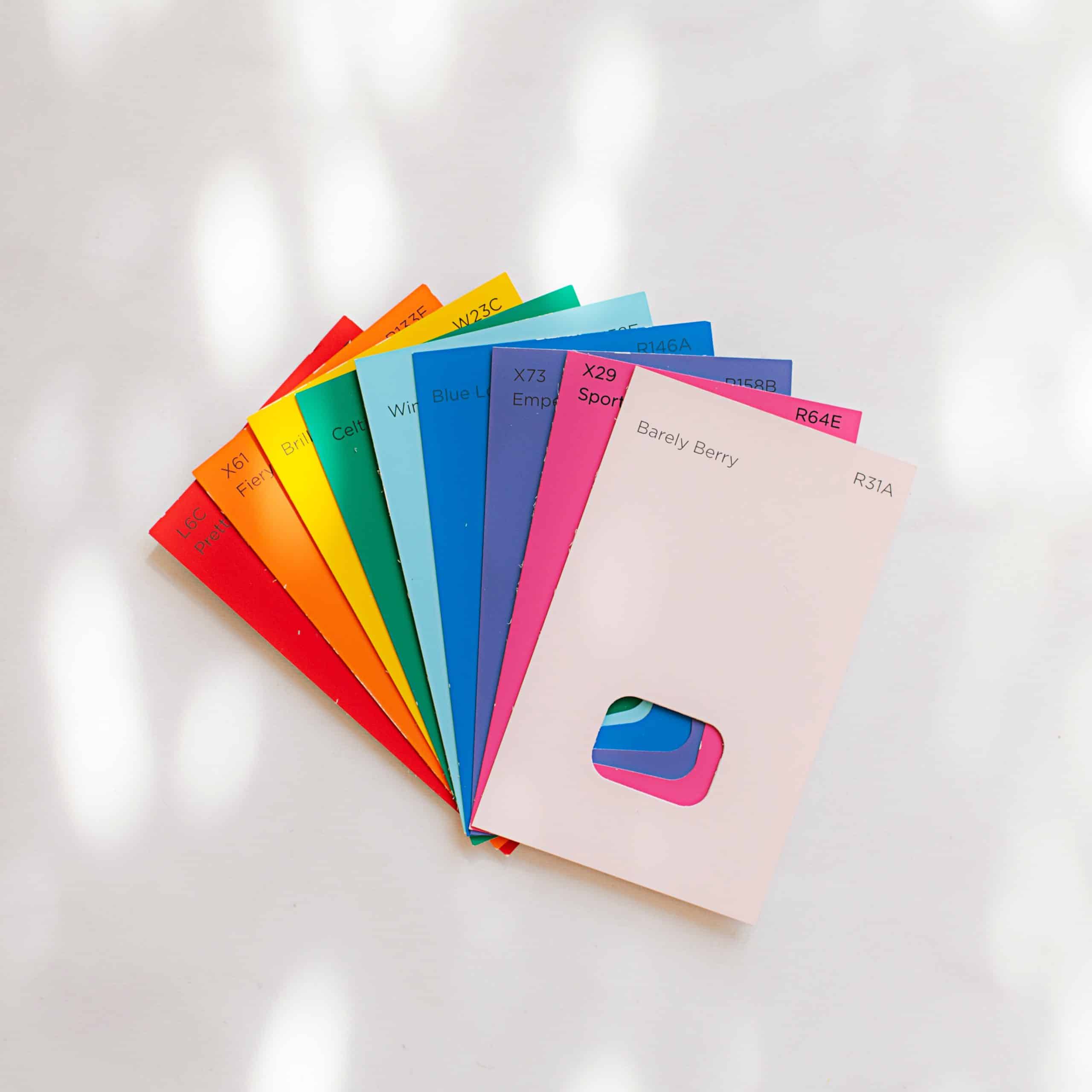
Colour swatches from nature
Summary: an activity to encourage careful observation, comparison and investigation outdoors, either in your back garden or out on a walk.
Set-up: 5 mins
Play: 30 mins – an hour
Complexity: Easy to more complex with extensions and additional activities
Materials
- Access to an outdoor space, or preferably a place to walk in nature
- A bag or basket to collect items
- Paper
- Glue
What to do
Challenge your child to find out what colours there are outside their home / on a nature walk. How many colours can they find? Collect a piece of each colour – whether this be a leaf, petal, feather, tree bark or stone. Can you name the colours? How can you differentiate names for all the different oranges you find? (Be creative: for example, sunset orange, burnt orange, wet orange, and so on, as well as light and dark orange) Did you know there were so many different oranges?
Extensions
Sort the colours. How many different oranges did you find? Browns? Greens? Try to order the colours from lightest to darkest. Create a colour palette for each colour by sticking your pieces down graded from lightest to darkest:
Colour Palette: Oranges
Is it easy to determine which colour group to put each piece? When does orange become red? Older children can write the names you invented for each shade on the colour palette. What do they think a colour palette like this could be useful for?
Grind up some of the drier pieces from nature (using a pestle and mortar, or a rolling pin and metal bowl) to see if you can make a coloured powder. Use these powders to create an artwork, by drawing a shape or outline, filling with white glue, and sprinkling with your nature powders!
What learning does this activity promote?
Observation, comparison, sorting, analysis, vocabulary, creativity, mathematics
By Dr Vicki Hargraves