
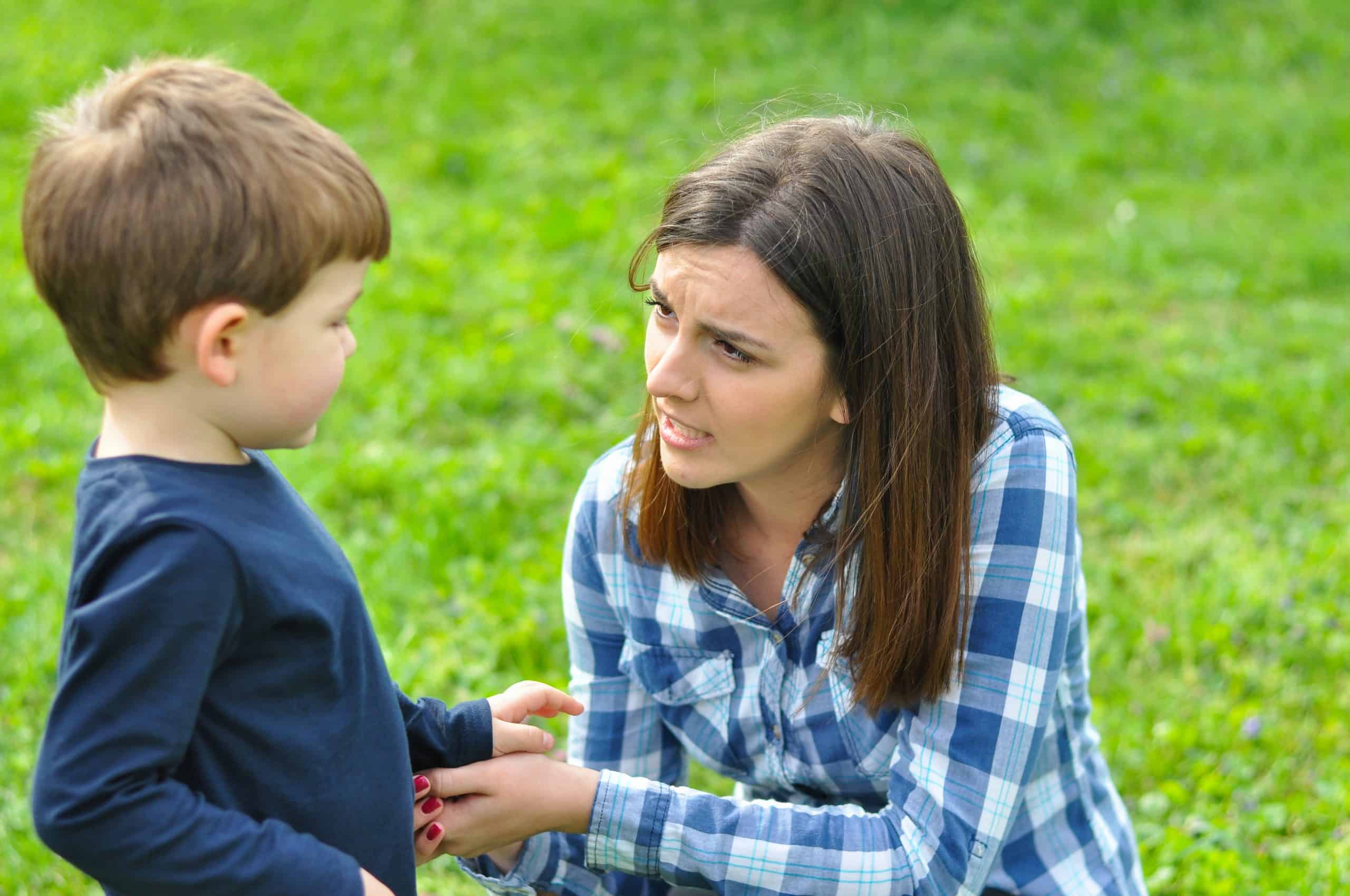
How trauma-informed practices can support neurodivergent and trauma-affected students
In this webinar, Tami Harris from Acorn Neurodiversity discusses using trauma-informed practices to support neurodivergent and trauma-affected students.
What is trauma?
Trauma is when an experience results in a person feeling uncertain about their safety. This feeling, especially when prolonged, can result in changes in the brain. There are three classifications of trauma.:
- ‘Simple trauma’ is when a person suffers from one traumatic event. An example might be a car accident, or a weather event such as a cyclone. In the latter example, a child might feel anxious each time it rains, but over time those feeling may gradually fade.
- ‘Complex trauma’ happens over a long period of time. Examples include family violence or chronic neglect. This prolonged exposure to feeling unsafe results in brain changes which affect how children respond to many other circumstances.
- ‘Developmental trauma’ is trauma experienced in utero. Stress hormones from the mother, bad nutrition, or alcohol or drug use during pregnancy could cause this type of trauma. Tami gives the example of someone pregnant in a war zone and the likely impact this would have on them. Developmental trauma results in different neurology from birth, and if the child was then born into the same situation that their parent’s experience, their developmental trauma would likely be compounded with complex trauma.
Children who have suffered from complex and developmental trauma are most likely to be the ones who teachers notice as having challenging behaviour. Perversely, teachers are more likely to hear about an incident that could cause simple trauma, making it easier to support those children. These categories are not hard and fast, and it is not possible to precisely predict who will experience trauma as a result of certain events or situations. Resilience and protective factors, such as having their basic needs met and having stability, can protect children from trauma. Having a trusted adult outside the family can also mitigate some of the causes of trauma. This is an important role that teachers can play for a child.
What is the impact of trauma?
Trauma-affected brains are wired for threat, not attachment, and have a heightened stress response. This is because their world is not safe and so they need to be vigilant. This means trauma-impacted children have a very narrow band where they are in a calm, relaxed, learning state. This can make school very difficult. It may seem that some children explode over something very small, like losing a pencil. However, in reality the pencil is just the final straw. Imagine a child like a bottle of coke. Each small thing that goes wrong, each stressor, is a shake of the coke bottle. These stressors could be little moments like running late for school, an argument with a sibling, a dropped book. However, each small stressor shakes the coke bottle until one final incident, the lost pencil, results in coke fizzing all over the place. Often this is then accompanied by criticism of their behaviour and how they should not react in this way to such a small event.
Children who struggle at school, particularly neurodivergent children, hear their name spoken negatively many more times than their peers. They therefore start tuning out their name and disengaging. In fact, all the negative feedback can mean that school itself can become a cause of further trauma, especially if a child is frequently sent out of a room or suspended.
What can teachers do?
Be detectives: The most helpful action that teachers can take to help these children is to become a detective about children’s behaviour. What are the stressors for each child? Some of these may be resolvable. For example, if a child struggles with sensory input overload, for example bright lights and loud noise, a teacher may be able to make tweaks to the environment. If a child needs room to move, perhaps that room could be created by rearranging furniture. If a child wants to fiddle, let them do puzzles or let them doodle. Do not stigmatise supports, but make them universal and uncontroversial. It is likely that the teacher will not see the full picture of each child. In many cases the trauma will be unknown, the neurodiversity undiagnosed. However, it is important not to make assumptions that presume naughtiness, cultural difference, or parenting issues. Instead, be curious, wonder what is going on, and be flexible in adapting to what you discover.
Use a trauma-informed approach: A trauma-informed approach is fundamentally a focus on emotional regulation. It prioritises keeping children happy, relaxed, engaged and ready to learn. It asks what the child’s unmet needs are, as well as their stressors and lagging skills, and focuses on addressing those. In trauma-informed teaching, teachers adjust their expectations and demands. They do not just look at the tip of the iceberg, where there might be challenging behaviours, but rather try to see what needs are underneath, believing that to address those will reduce the amount of the behaviours. A trauma-informed approach prioritises keeping children in the classroom and able to learn, rather than compliance to fix rules of behaviour. This does not mean that students can do whatever they like; rather it recognises that in a power struggle everyone loses, whereas finding the optimal learning situation for each child is a win-win.
A trauma-informed approached can look a little different during different moments of schooling:
In early childhood education all the children will be working on their emotional regulation, but neurodiverse and trauma-impacted children might be a couple of years behind their peers, and they might need help co-regulating for longer. Flexibility is key here. Do they really need to sit on the mat, or could this be something they work towards? Children at this age will likely rely on the teacher to narrate their feelings, narrate their play, and try and draw them into parallel play with their peers.
This continues into early primary school, but the child will also undergo a huge transition with many more cognitive and social demands. They will be expected to be stiller in a smaller space, which can be very challenging for a five-year-old. Routines, discussed below, become very important here and bounded choices can be good idea, giving the child a choice between A and B, rather than yes or no. This is when more defiance and more social interaction issues might be experienced. As above, the priority is to the keep the child in the classroom, connected and part of the group.
The great challenge for teachers as neurodiverse and trauma-impacted children move up into intermediate and secondary school is that they have much less time to form relationships, making the detective work needed for a trauma-informed approach harder to do. ‘2×10’ is a helpful approach. This mean purposefully spending two minutes a day for ten days with a child who you know less well or are feeling negatively towards. Learn what makes them tick, let them know they’re not invisible, make a connection. Do this alongside consistent routines.
Don’t forget CRP: In trauma-informed teaching CRP stands for consistent, predictable routines. For students for whom life feels unsafe (and for most other children), routines are reassuring. They allow the class to know what to do and what to expect, giving a feeling of security. This means that being in the right place at the right time and doing the right thing becomes second nature, especially as the year progresses. This lowers the strain on working memory and executive function. These consistent, predictable routines can happen throughout the day, whether it be how to line up, how to come back into class after lunch, how to transition in and out of the classroom or, in secondary school, move between classrooms. Music can also be part of these routines, used to rev up or down, giving the students clear instructions about what is expected of them.
Clear instructions, explicit teaching of desired behaviours, and modelling should also be used to set expectations. Do not assume that neurodivergent or trauma-impacted children will know what they ‘should’ know. For many children the unwritten rules are unknowable, unless they are directly taught. If a child is being rude, instead of berating them, think about what rule they are breaking and if it has been directly taught. Do they, for example, know that they are not supposed to talk when someone else is talking? Has that been directly explained, or has understanding of this been taken for granted? Social stories illustrating classroom behaviour can be a great way to teach expectations and using photos of your actual students might be particularly effective.
As well as ensuring that your classroom has consistent, predictable routines, make sure that you are a consistent, predicable adult. This means working on your own regulation, checking your own responses and making sure that you do not shout, or whatever your go-to dysregulated state is. Instead use yourself to model emotional regulation for the children by explaining your emotions, for example: ‘I am feeling frustrated now. I am going to take ten deep breaths’ or ‘I did not sleep well last night; I am tired this morning’. This shows children that everyone has emotions and struggles sometimes, but that there are ways of dealing with these feelings without negatively affecting themselves or others. This will not necessarily be easy; dealing with dysregulated children is a challenge, especially when there are other students to look after as well.
Teach the whole class about being ready-to-learn and basic neuroscience: Ultimately, we want children to learn to regulate themselves and teachers have an important role in teaching students to recognise their emotions and know what to do. Having class-wide metaphors for ready-to-learn states can be helpful. For older students, this could be a phone reception bar (full bars to no signal), while for younger children the weather works well (sunny, cloudy, raining). At different points during the day the teacher could ask the students where they are in their rating: ‘Oh, it looks like we do not have many bars over in this corner, what could we do to recharge so that we can focus on this part of the lesson?’ The teacher and students might need some music, a little yoga, a brainteaser – something to re-regulate. Once the students are back at full bars/sunny weather, they are ready to learn. This not only normalises that feelings change over the day, but it also offers children explicit teaching of how to recharge and regulate.
On top of this, teaching the whole class basic neuroscience can be a good way to destigmatise dysregulation and to help the rest of the class understand what is going on if one of their classmates become dysregulated. Tami suggests using a hand as an example. She puts her thumb across her palm and explains that the thumb is the brain stem. When this part of the brain is in charge, flight, fright, freeze are its only options. She then lowers her fingers over her thumb. Her fingers represent the pre-frontal cortex which is in charge when a person is making good decisions and is calm. When someone ‘flips their lid’ (here the lid, i.e the fingers/pre-frontal cortex flip up), the thumb/brain stem is in charge. This means that a person in this state is not able to make good decisions, until they have become re-regulated and those fingers are lowered and the pre-frontal cortex is in charge again.
Work towards minimising moments of dysregulation: Because the brain-stem is in charge, children who are dysregulated cannot be reasoned with in the moment. Teachers need to focus on keeping other children safe. They might be able to shout, or whisper STOP and the surprise of it could distract the dysregulated child. They might be able to move another child who was in danger of being hurt or put themselves in between the two children. However, by the time the child has got into that dysregulated state, there is no magic answer. Co-regulation, calming down alongside a child can be helpful, especially when children are younger.
A trauma-informed approach tries to prevent these moments from occurring. This is very important as the more we do something, the more neural pathways are laid down and the more we learn how to do it, whether the ‘it’ in question is positive or negative behaviour. Therefore, is it important to teach children prone to dysregulation other skills, a plan B, so that they can learn that there is another way to be successful that does not include, for example, hitting.